What Do You Call a Person Who Volunteers? The Right Word Matters
 Dec, 4 2025
Ever been told you’re a ‘good person’ for helping out at the food bank, and wondered if there’s a better word for it? You’re not just ‘someone who helps.’ There’s a name for what you do - and it matters more than you think.
Volunteer is the word
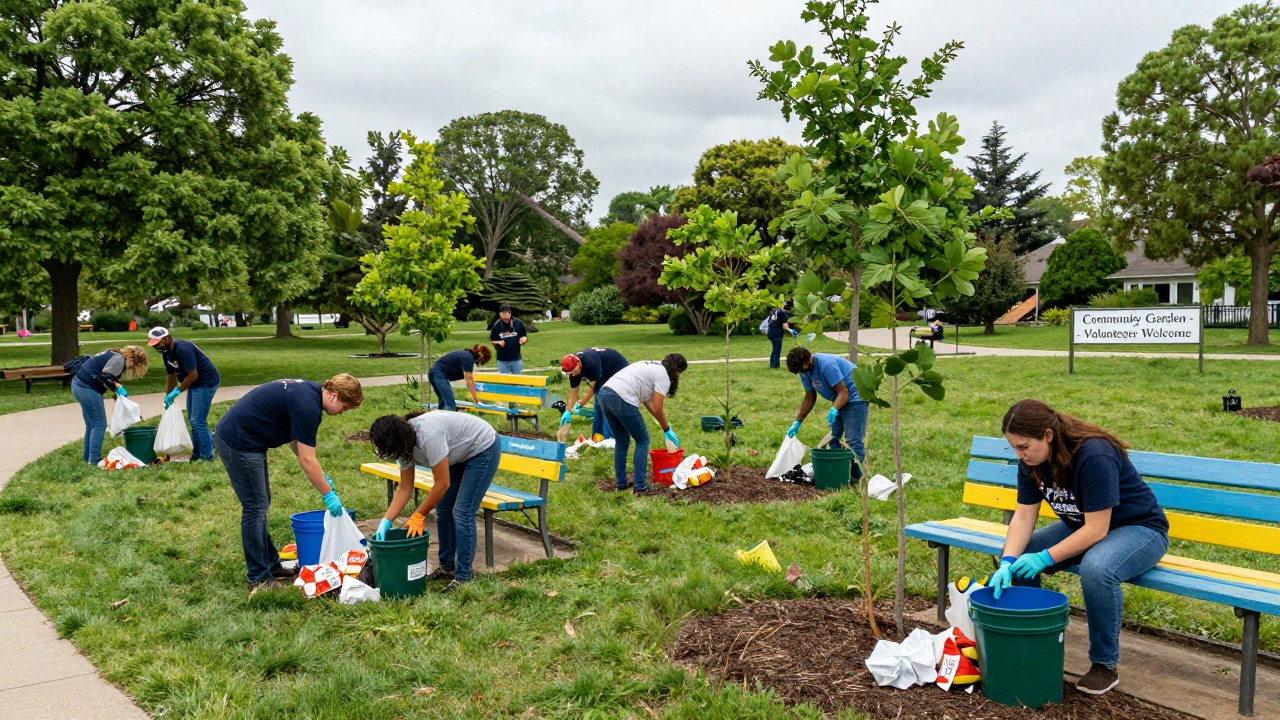
The simplest, most accurate term for someone who gives their time without pay is volunteer. It’s not a fancy label. It’s not a title you earn after 100 hours. It’s not a badge you wear. It’s just what you are when you show up - whether it’s serving meals, tutoring kids, walking dogs at the shelter, or cleaning up a park on a Saturday morning.
People say ‘helper,’ ‘do-gooder,’ or ‘community member’ - but those are descriptions, not definitions. Volunteer is the official term used by nonprofits, governments, and global organizations like the United Nations. It’s the word on application forms, training manuals, and recognition certificates. It’s the word that carries weight because it’s intentional: you chose to give your time, energy, and skill without being paid.
Why the label matters
Calling someone a ‘volunteer’ isn’t just about correctness. It’s about respect. When you say ‘volunteer,’ you’re acknowledging that this person made a decision. They didn’t get forced into it. They didn’t do it because they had to. They did it because they wanted to.
Think about it: if you worked at a café for eight hours and got paid $20 an hour, you’d be called an employee. If you showed up at the same café after hours to clean up, train new staff, and organize donations - without a paycheck - you’d be a volunteer. Same work. Different motivation. Different label.
Using the right word stops the quiet devaluation of unpaid work. Too often, volunteers are treated like extras - ‘Oh, you’re just here helping.’ No. You’re not ‘just’ anything. You’re a volunteer. And that’s a role with responsibility, skill, and impact.
Other terms you might hear - and why they fall short
You’ll hear a lot of alternatives. Some are well-meaning. Others are misleading.
- Helper - Too vague. Everyone helps. Cashiers help customers. Parents help kids. Volunteers help - but they do it without pay, and often beyond their job description.
- Do-gooder - Sounds cute, but it’s often used sarcastically. It implies the person is naive or overly idealistic. That’s not fair.
- Community member - True, but too broad. Everyone in the neighborhood is a community member. Not everyone volunteers.
- Donor - That’s someone who gives money. Not time. Big difference.
- Activist - That’s someone pushing for systemic change. Many volunteers are activists. But not all activists volunteer. And not all volunteers are activists.
There’s also ‘charity worker’ - but that usually means someone paid by a nonprofit. Volunteers aren’t paid. That’s the whole point.

What about titles like ‘volunteer coordinator’ or ‘volunteer leader’?
Those aren’t the person - they’re the role. A volunteer coordinator is a volunteer who also manages other volunteers. A volunteer leader might run a team at a food drive. These are responsibilities, not identities. The person is still a volunteer. The title just tells you what they do within that role.
Think of it like this: a teacher is a teacher. But if they also coach soccer after school, they’re a volunteer coach. They’re still a teacher. The volunteer part is the context, not the core identity.
How organizations talk about volunteers
Good nonprofits don’t call volunteers ‘free labor.’ They don’t say ‘we rely on unpaid staff.’ They say: ‘Our volunteers make this possible.’
In Australia, the Australian Bureau of Statistics tracks volunteering rates every year. In 2023, 5.3 million Australians - nearly one in four - volunteered regularly. That’s not a drop in the bucket. That’s a massive force of people giving time to causes they care about.
Organizations like Red Cross, St. Vincent de Paul, and local animal shelters all use the word ‘volunteer’ consistently. Why? Because it’s clear. It’s dignified. It’s accurate.
What you can say when someone asks
If someone asks, ‘What do you do?’ and you spend weekends at the youth center or sorting clothes at the thrift store - don’t downplay it.
Say: ‘I’m a volunteer at the local youth hub.’
Or: ‘I volunteer with the community garden project.’
Or even: ‘I volunteer.’
That’s enough. You don’t need to explain. You don’t need to justify. You don’t need to apologize for not getting paid. You’re a volunteer. That’s a full, meaningful role.
Why this isn’t just semantics
Language shapes how we see the world. If we call volunteers ‘helpers,’ we treat their work as optional, casual, or temporary. If we call them volunteers, we recognize their contribution as essential.
When schools, hospitals, and councils ask for ‘volunteers,’ they’re not asking for favors. They’re asking for partners. People who bring skills, reliability, and heart to the table.
And when you say ‘I’m a volunteer,’ you’re not just describing what you do - you’re claiming your place in a network of people who believe community isn’t something you wait for. It’s something you build.
Final thought: You’re not just helping. You’re volunteering.
There’s power in the word. It’s simple. It’s honest. It’s respected. You don’t need a certificate to be one. You don’t need a plaque. You just need to show up.
So next time someone asks what you do - say it loud. Say it proud. Say it with no apology.
You’re a volunteer.
Is there a difference between a volunteer and a charity worker?
Yes. A charity worker is typically paid by the organization to do a job - like managing programs, fundraising, or running operations. A volunteer gives their time without pay. Someone can be both - for example, a paid director who also helps serve meals on weekends. But the roles are distinct. The key difference is payment.
Can you call yourself a volunteer if you only help once a year?
Absolutely. Volunteering isn’t about frequency. It’s about intent. If you showed up to plant trees at a community event last spring, helped pack hampers for Christmas, or tutored a student for a month - you’re a volunteer. One-time contributions matter just as much as weekly ones. Many organizations rely on people who give a few hours a year.
Do volunteers need training?
Many do - and for good reason. Whether you’re working with kids, handling food, or driving clients to appointments, organizations provide training to keep everyone safe and effective. It’s not about proving you’re qualified - it’s about protecting the people you serve. Training turns good intentions into reliable action.
Can a volunteer become a paid employee?
Yes, but it’s not automatic. Many nonprofits hire volunteers who’ve shown commitment, reliability, and skill. But hiring is based on need, qualifications, and funding - not just on how long someone’s volunteered. Don’t volunteer hoping for a job. Volunteer because you care. If a paid role opens up and you’re the right fit, that’s a bonus - not the goal.
What if I’m not good at volunteering? Do I still count?
You don’t have to be perfect. You don’t have to be the fastest, the loudest, or the most organized. You just have to show up. Volunteering isn’t about performance. It’s about presence. A quiet person who listens to an elderly neighbor is just as valuable as someone who organizes a fundraiser. Your effort counts, no matter how small it seems.