How to Make Your After-School Club More Fun for Kids
 Mar, 20 2026
After-School Club Fun Calculator
How Fun is Your Club?
This tool assesses your club's fun factor based on key principles from the article. Enter your responses below to get personalized tips.
Let’s be honest-some after-school clubs feel more like detention than fun. Kids show up, sit in a circle, do the same thing every week, and zone out. You’re not failing. You just haven’t found the right mix yet. Making a club fun isn’t about fancy gear or big budgets. It’s about connection, surprise, and giving kids real ownership. Here’s how to turn your club from boring to buzzing.
Start with what they actually care about
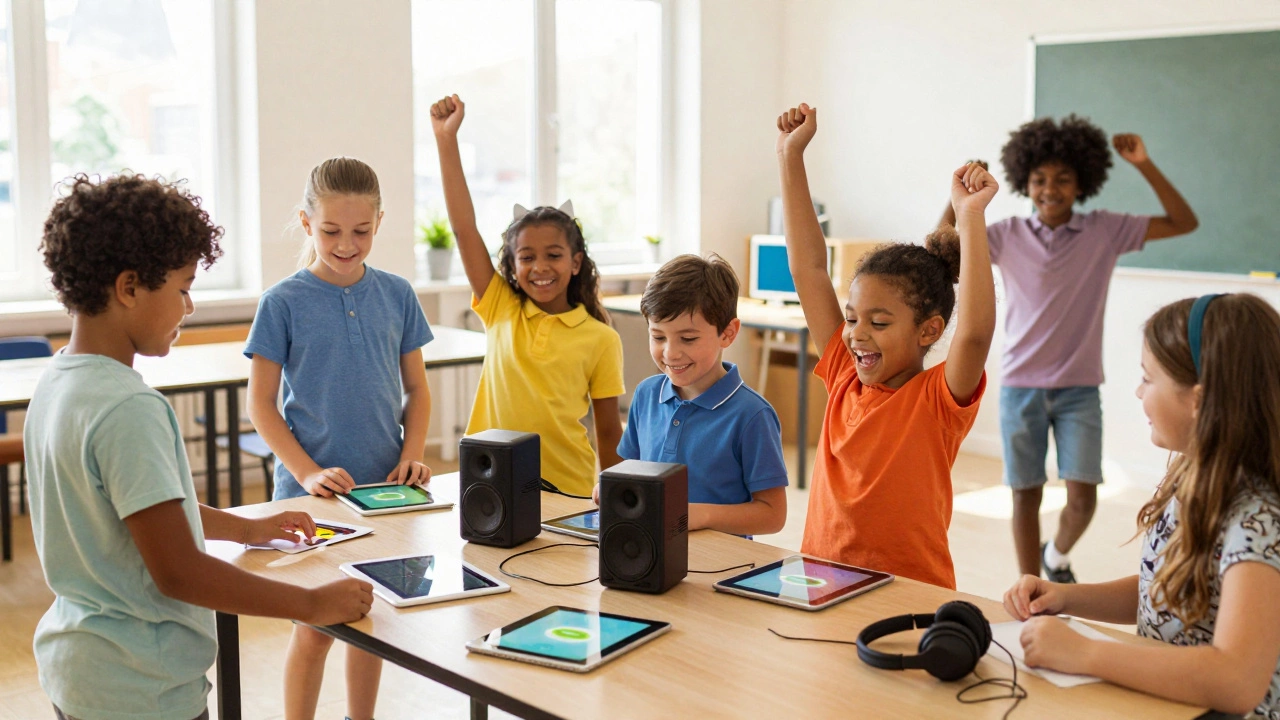
Don’t assume you know what kids want. Ask them. Seriously. Hand out a simple two-question survey: "What’s one thing you’d love to do after school?" and "What’s one thing you hated in last term’s club?" You’ll get answers like "I want to build stuff," "I hate sitting still," or "Can we have snacks?" (Yes, snacks matter.) In a Melbourne primary school last year, a teacher asked this question and discovered 70% of kids wanted to make music, not draw. So she swapped art for a beat-making station using free apps on old tablets. Attendance jumped by 40%. Start with real data, not guesses.
Build in movement-no sitting still
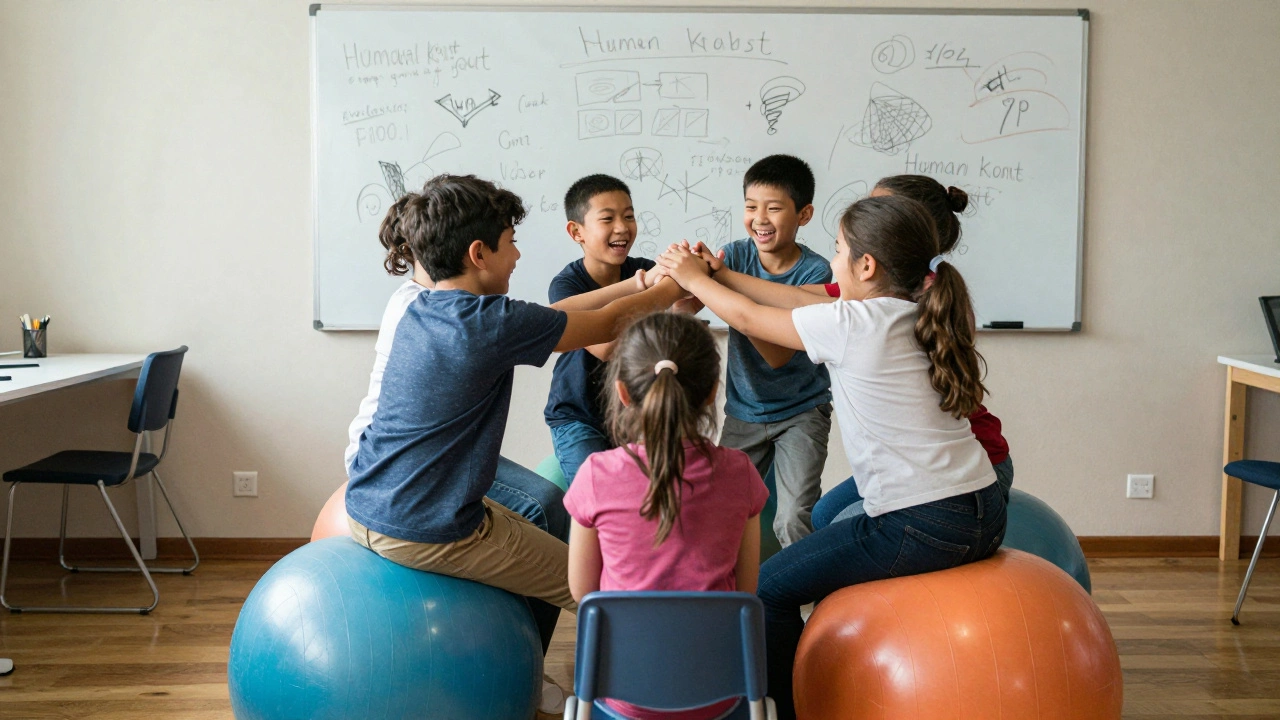
Kids aren’t designed to sit for 45 minutes. Their brains need motion to lock in learning. Turn every activity into something that involves standing, walking, or doing. Instead of reading a story aloud, turn it into a scavenger hunt around the room with clues hidden under chairs. Instead of talking about teamwork, play a 10-minute game of "Human Knot" where they untangle themselves without letting go of hands. Even simple things like standing while brainstorming ideas or pacing while sharing thoughts help. One club in Footscray replaced chairs with yoga balls. Kids couldn’t sit still, so they didn’t. And guess what? They paid attention longer.
Let them lead
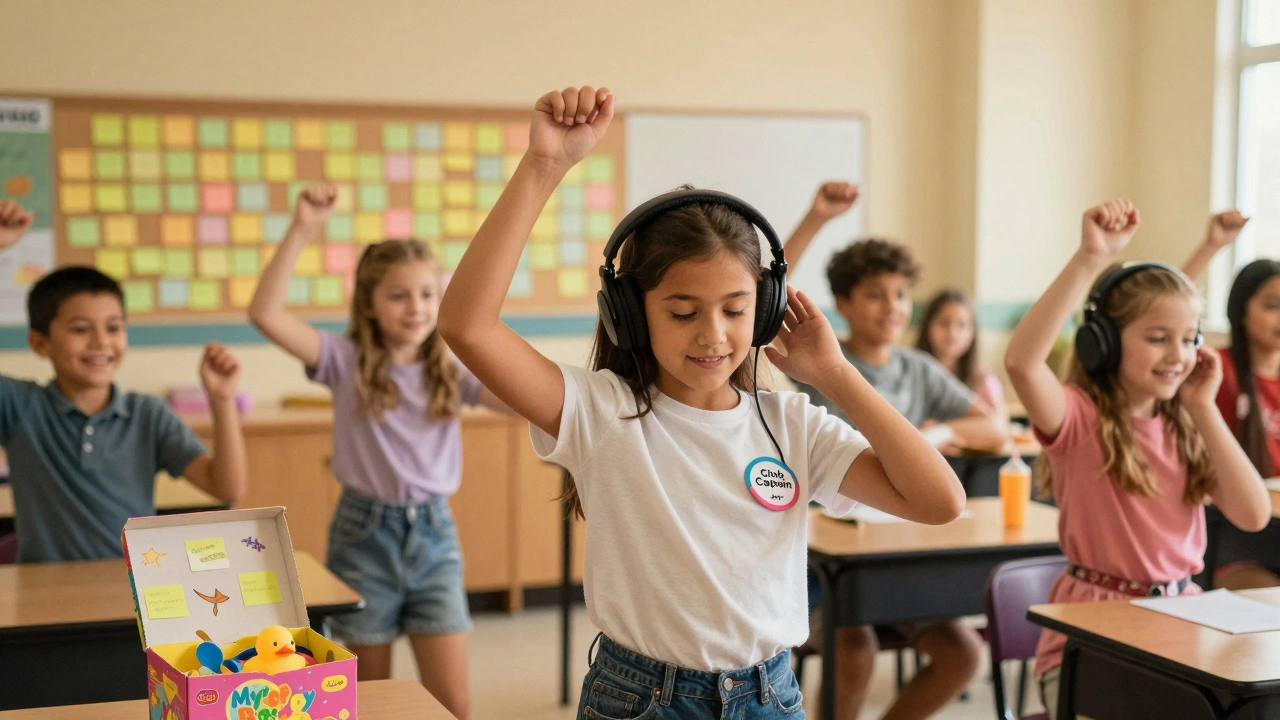
When kids feel like they own the club, they show up. Create a "Club Captain" role that rotates weekly. The captain picks the theme for the week, chooses the first activity, and even gets to pick the snack (within reason). In a club at St Kilda Primary, a shy 10-year-old became captain and surprised everyone by leading a "silent disco" session with headphones and a playlist she made. No one knew she loved DJing. Now she’s the most engaged kid in the group. Rotating leadership builds confidence and gives everyone a chance to shine.
Use low-cost, high-impact tools
You don’t need a $500 budget. You need creativity. Here are five free or cheap tools that work every time:
- Free music apps like Soundtrap or GarageBand for quick beat-making sessions
- DIY obstacle courses made with chairs, blankets, and cones
- Story cubes (dice with pictures) to spark wild storytelling
- Whiteboard walls or giant paper sheets for collaborative drawing or problem-solving
- "Mystery Box" challenges-put random objects inside (a spoon, a sock, a rubber duck) and challenge kids to invent a new game using only those items
One club in Dandenong used a $10 box of craft sticks and turned them into a 6-week engineering challenge. Kids built bridges, towers, and even a "catapult" to launch marshmallows. No adult told them how. They figured it out themselves. That’s the magic.
Surprise them with "unplanned" moments
Fun isn’t planned. It’s unexpected. Once a month, cancel the agenda. Just say: "Today is Wild Day." Let kids bring in one thing they love-a toy, a game, a song-and share it with the group. Or invite a local artist, athlete, or teen volunteer to drop in for 15 minutes and do something crazy: juggle, tell a ghost story, teach a dance move, or show how they fix bikes. These moments stick. They become the stories kids tell their friends. One kid in Richmond still talks about the day a street musician showed up and taught everyone to play the ukulele with one finger.
Make it social-not just academic
Clubs aren’t classrooms. Kids don’t join to learn fractions. They join to connect. Build in time for real talking. Start each session with a "Two Truths and a Lie" round. End with a "High Five" circle where everyone shares one good thing that happened that week. Add a "Friendship Wall"-a board where kids can leave sticky notes praising someone else in the club. "I liked how Sam helped me fix my robot." Those moments build belonging. And belonging keeps them coming back.
Track what’s working-not just attendance
Don’t just count how many kids show up. Ask: "Did anyone laugh today?" "Did someone say, ‘Can we do this again next week?’" "Did someone ask for more time?" Keep a simple log: one line per session. Note the mood, the standout moment, and one thing to try next time. After three weeks, you’ll see patterns. Maybe your club thrives on music. Maybe it’s chaos. Maybe it’s snacks. You’ll know. And you’ll get better.
Don’t fix what’s not broken
Some clubs are quiet. Some are messy. Some are loud. There’s no one right way. If kids are laughing, moving, asking for more, and talking about it outside the club-you’re doing it right. You don’t need to be Pinterest-perfect. You just need to be real. Be present. Be willing to be weird. Be willing to let them lead. That’s what makes a club unforgettable.
What if my kids aren’t interested in any activities?
Start with zero structure. Just show up with a few open-ended tools: a big sheet of paper, some markers, a pile of old magazines, and a timer. Say, "Pick something and make it weird." Often, kids don’t know what they want until they’re given permission to explore. One club in Prahran started with this and ended up creating a "zine" (a handmade magazine) about alien pets. The kids were hooked.
How do I handle kids who dominate the group?
Give them a role. Let them be the "Rules Keeper" or "Time Tracker." When kids feel responsible, they shift from controlling to contributing. One boy who always interrupted was given the job of deciding how long each activity lasted. He became the most reliable member. Structure gives power a purpose.
Can I make a club fun without spending money?
Absolutely. The most fun clubs I’ve seen used cardboard boxes, old clothes, chalk on pavement, and imagination. A "fort-building" day with blankets and chairs cost nothing. A "mystery sound" game-where you play weird noises and kids guess what they are-only needs a phone and YouTube. Fun comes from creativity, not cash.
What if I’m not creative?
You don’t have to be. Borrow ideas. Look at YouTube videos of kids’ clubs, check out free lesson plans from libraries, or ask another teacher for their best activity. One teacher in Clayton started copying ideas from a school in Brisbane and adapted them. Within two weeks, her club had its first "wild day." You don’t need to invent it-you just need to try it.
How do I get kids to come back week after week?
Build anticipation. Tease next week’s activity: "Next time, we’re turning the room into a jungle. Bring your loudest voice." Or create a simple reward: a sticker for every time someone tries something new. Kids don’t come for the content-they come for the feeling. If they feel seen, heard, and excited, they’ll keep showing up.
Remember: fun isn’t about being perfect. It’s about being alive. When kids feel like they belong, they’ll do more than show up-they’ll bring their whole selves. And that’s what makes a club matter.