Which Religion Gives the Most? Analyzing Global Charity Data by Faith
 May, 22 2026
Global Generosity Analyzer
Adjust Parameters
Adjust the sliders to simulate different economic conditions and priority focuses.
Christianity
Volume LeaderIslam
Consistent & HighJudaism
Highest % IntensityHinduism & Buddhism
Service OrientedAnalysis Insight
Adjust the sliders to see how different religions compare based on specific criteria.
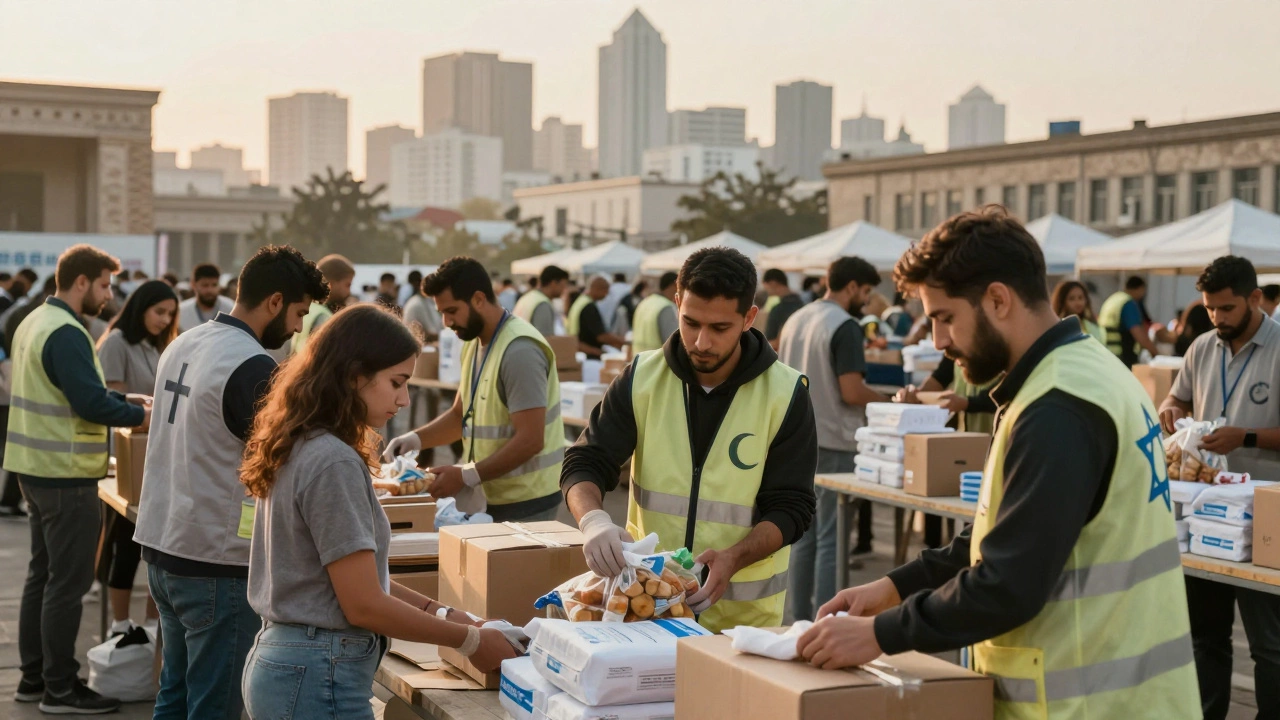
Money talks, but when it comes to global aid, faith speaks louder. If you walk into any major city in the world today, you will see hospitals run by nuns, food banks staffed by volunteers from local mosques, and disaster relief teams organized by Buddhist monks. The question isn't whether religion drives charity; the data proves it does. But if we have to pick a winner, which faith actually gives the most?
The short answer is complicated because "most" can mean different things. Are we talking about the total amount of money donated globally? The percentage of personal income given away? Or the sheer number of volunteer hours logged? Depending on how you measure generosity, the title for most charitable religion shifts between Christianity, Islam, Judaism, and Hinduism. Let's break down the numbers, the methods, and the real-world impact of faith-based giving.
Defining Generosity: Money vs. Time vs. Impact
Before we look at the specific religions, we need to agree on what we are measuring. Philanthropy isn't just writing a check. It involves three main pillars:
- Financial Giving: Direct monetary donations to charities, churches, temples, or causes.
- Volunteering: Unpaid time spent helping others, which has a significant economic value.
- In-Kind Donations: Providing goods like food, clothing, or medical supplies instead of cash.
Most studies focus on financial giving because it is easier to track. However, this skews the picture. A wealthy donor in one country might give millions, while a community in another might give less money but provide thousands of hours of labor. To get a true picture of which religion is the most charitable, we have to look at all three metrics across different regions.
Christianity: The Volume Leader
When looking at raw totals, Christianity often tops the list. This makes sense statistically. Christians make up roughly 31% of the global population, numbering around 2.4 billion people. With such a massive base, even a small average donation per person adds up to trillions of dollars annually.
| Metric | Data Point |
|---|---|
| Global Adherents | ~2.4 Billion |
| Estimated Annual Giving (Global) | $1.5 Trillion+ |
| Key Organizations | Catholic Relief Services, World Vision, Samaritan's Purse |
In the United States, Pew Research Center data consistently shows that Christians are more likely than non-religious individuals to donate to charity. Evangelical Protestants, in particular, tend to give higher percentages of their income compared to mainline Protestants or Catholics. The infrastructure here is huge. Major NGOs like World Vision and Catholic Relief Services operate in over 100 countries, providing everything from emergency disaster relief to long-term development projects.
However, volume doesn't always equal intensity. While Christians give the most in total dollars, the average individual Christian might not give as high a percentage of their income as followers of other faiths. The system relies on scale.
Islam: The Mandate of Zakat
If Christianity wins on volume, Islam often wins on consistency and mandatory structure. In Islamic tradition, giving isn't just a suggestion; it is one of the Five Pillars of the faith. This pillar is called Zakat, which requires Muslims to give 2.5% of their surplus wealth each year to those in need.
This creates a baseline level of giving that is incredibly stable. Unlike voluntary tithing in some Christian denominations, where giving might fluctuate with economic conditions, Zakat is a religious obligation. Studies suggest that Muslim households, particularly in Muslim-majority countries, often exceed this 2.5% minimum through additional voluntary charity known as Sadaqah.
Research from the Institute of Muslim Minority Affairs in London has shown that Muslims in the UK give a higher proportion of their income to charity than any other religious group. When you factor in the billions of Muslims worldwide, the collective impact is staggering. Islamic charities are often the first responders in conflicts involving Muslim populations, such as in Gaza, Syria, and Yemen, filling gaps left by secular governments.
Judaism: High Percentage, High Engagement
When we look at the percentage of income given, Jewish communities frequently rank at the very top. Despite making up less than 0.2% of the global population, Jewish philanthropy is disproportionately large. This is driven by the concept of Tzedakah, which translates not just as "charity" but as "justice" or "righteousness."
In many Jewish communities, there is a strong cultural expectation to give significantly above the minimum. It is common for Jewish donors to give 10% or more of their income. Because the community is smaller but often economically well-established in Western nations, the per-capita giving rate is extremely high. Jewish federations in cities like New York, Los Angeles, and Melbourne pool resources to fund massive endowments for healthcare, education, and social services.
The key difference here is strategy. Jewish giving is often highly organized and focused on long-term institutional support rather than just immediate relief. You see this in the funding of universities, hospitals, and research centers globally.

Hinduism and Buddhism: Community and Compassion
Religions originating in Asia, such as Hinduism and Buddhism, approach charity differently. In Hinduism, the concept of Dana (giving) is central. During festivals like Diwali, giving is a major activity. However, much of this giving happens within the community or family network, making it harder to track in global datasets.
Buddhism emphasizes compassion and merit-making. Monasteries serve as community hubs where food and shelter are provided. In countries like Thailand and Myanmar, daily alms-giving is a routine practice. While the monetary value might be lower in dollar terms compared to Western charities, the social cohesion and support systems are robust. These forms of charity are often overlooked in Western-centric studies that focus on bank transfers and registered NGOs.
The Secular Shift and Non-Religious Giving
We cannot talk about charity without mentioning the growing demographic of non-religious individuals. In many Western countries, including Australia and parts of Europe, the number of people identifying as atheist, agnostic, or "nothing in particular" is rising. Do they give less?
Data suggests that non-religious people do give, but their patterns differ. They are less likely to give to religious institutions and more likely to support secular causes like animal welfare, environmental protection, and political advocacy. While their per-capita giving might be lower than devout religious groups, their aggregate contribution is significant due to population size in secularized nations.
Comparing the Giants: A Snapshot
To visualize how these groups compare, let's look at a simplified comparison based on available global trends.
| Religion | Giving Driver | Average Intensity | Primary Focus Areas |
|---|---|---|---|
| Christianity | Tithing / Voluntary | High Total Volume | Disaster Relief, Healthcare, Education |
| Islam | Zakat (Mandatory) | Consistent & High | Poverty Alleviation, Conflict Zones |
| Judaism | Tzedakah (Justice) | Highest % of Income | Healthcare, Education, Social Justice |
| Hinduism | Dana (Duty) | Community-Focused | Family Support, Festivals, Local Aid |
| Buddhism | Merit-Making | Service-Oriented | Monastic Support, Environmental Care |
Notice that no single religion dominates every category. Christianity leads in total dollars raised globally. Islam ensures a consistent floor of giving through mandate. Judaism leads in per-capita intensity in Western contexts. This diversity is actually a strength for the global humanitarian sector.

Why Faith-Based Charity Works
You might wonder why religious organizations are so effective. The answer lies in trust and network. People trust their places of worship. When a mosque, church, or synagogue asks for help, members respond because they believe the funds will be used ethically and efficiently. This reduces the overhead costs associated with marketing and fundraising that secular charities face.
Furthermore, faith-based groups have deep roots in local communities. They know who needs help before a crisis hits. This allows for proactive rather than reactive aid. For example, during natural disasters, local religious leaders often coordinate evacuation and supply distribution faster than government agencies because they already have the relationships in place.
Challenges in Tracking Religious Charity
It is important to note that getting accurate data on religious charity is difficult. Many donations are made in cash, anonymously, or directly to individuals rather than through registered charities. Small-scale giving, like buying groceries for a neighbor, rarely appears in national statistics. This means the actual numbers for all religions are likely higher than reported.
Additionally, cultural differences affect how giving is recorded. In some cultures, giving is a private act of piety, while in others, it is a public demonstration of status. These nuances make direct comparisons tricky. We must interpret the data with caution, recognizing that "most charitable" depends heavily on the lens through which we view generosity.
The Future of Faith-Based Giving
As the world becomes more secular, the role of religious charity is evolving. Many faith-based organizations are now partnering with secular NGOs and governments to maximize impact. There is also a growing trend toward transparency, with religious charities adopting professional accounting standards to build trust with a broader donor base.
Younger generations, regardless of faith, are increasingly interested in impact-driven giving. They want to see exactly where their money goes. This pressure is pushing traditional religious institutions to modernize their reporting and outreach methods. The future of charity will likely be a hybrid model, combining the grassroots energy of faith communities with the technological efficiency of secular platforms.
Which religion donates the most money globally?
Christianity typically donates the most money globally in total volume due to its large population base of approximately 2.4 billion adherents. Organizations like Catholic Relief Services and World Vision manage billions of dollars in annual budgets.
Do Muslims give a higher percentage of their income?
Yes, Muslims are required to give 2.5% of their surplus wealth through Zakat, one of the Five Pillars of Islam. Many Muslims give more than this minimum through voluntary Sadaqah, often resulting in high per-capita giving rates comparable to or exceeding other groups.
Is Jewish philanthropy the highest per capita?
In many Western countries, Jewish communities report some of the highest per-capita giving rates, often exceeding 10% of income. This is driven by the concept of Tzedakah, which views giving as an act of justice rather than mere charity.
How does secular giving compare to religious giving?
Secular giving tends to focus on specific causes like environment and animal welfare, whereas religious giving is often broader, including community support and disaster relief. While religious groups often show higher engagement rates, secular donors contribute significantly to niche areas.
Why is it hard to track religious charity accurately?
Much religious charity occurs through informal channels, such as cash donations, direct aid to individuals, or in-kind contributions that are not recorded in formal financial databases. Cultural norms around privacy also limit the visibility of these acts.