What is the best food to give a homeless person?
 Feb, 10 2026
When you see someone sleeping on the sidewalk or standing in line at a shelter, it’s natural to want to help. You grab a sandwich from the grocery store, maybe a bag of chips, or a bottle of water. But here’s the hard truth: not all food helps. Some of it might even make things worse.
Why food choices matter more than you think
Homeless people don’t just need calories-they need nutrition. Many live with chronic health issues: diabetes, high blood pressure, kidney disease, or mental health conditions that affect appetite and digestion. A bag of chips or a sugary drink might give a quick energy boost, but it leaves them hungrier later and can worsen their health over time.Shelters in Melbourne and across Australia have shifted away from just handing out leftovers. They now work with dietitians to plan meals that support long-term health. The goal isn’t just to fill a stomach-it’s to rebuild a body.
What actually works: the top 5 foods to give
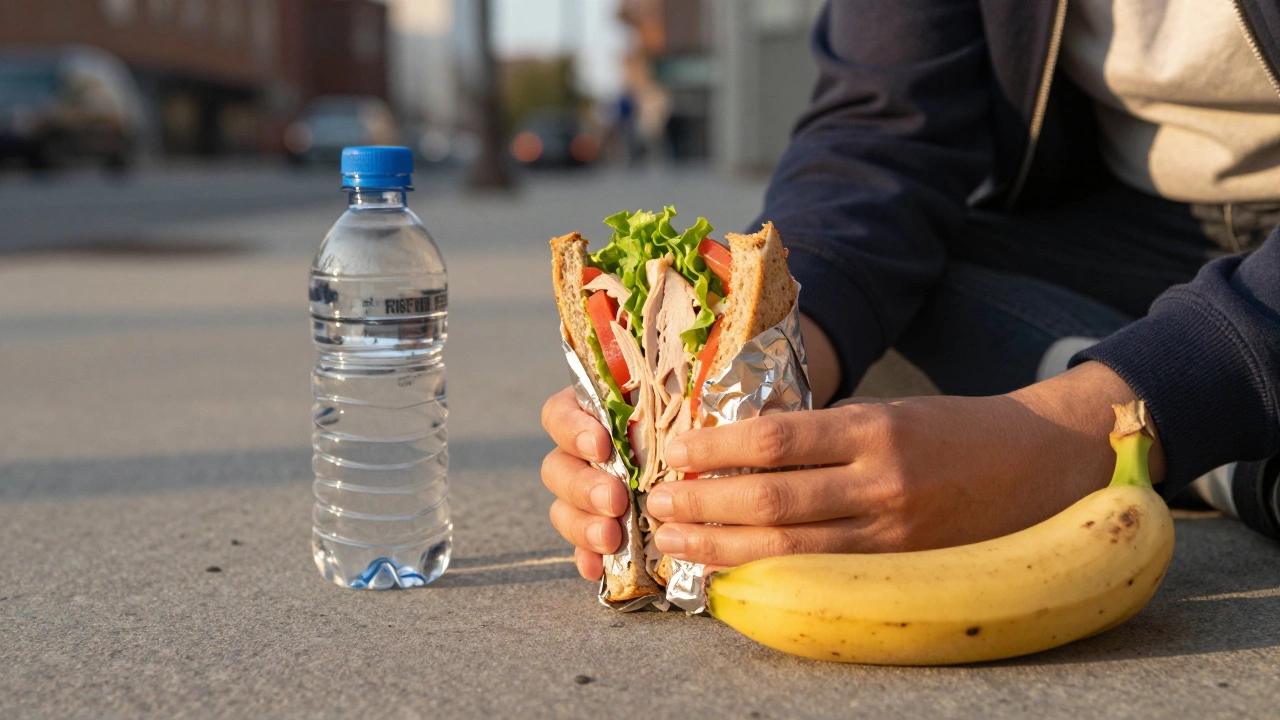
1. Whole grain sandwiches with lean protein A sandwich made with whole wheat bread, turkey or canned tuna, lettuce, and tomato is one of the most practical, nutrient-dense options. It’s easy to eat on the go, doesn’t need reheating, and gives a balance of fiber, protein, and vitamins. Avoid processed deli meats loaded with sodium. Opt for fresh, low-salt options.Pro tip: Wrap it in foil, not plastic. Plastic traps moisture and makes bread soggy. Foil keeps it fresh longer and is easier to dispose of.
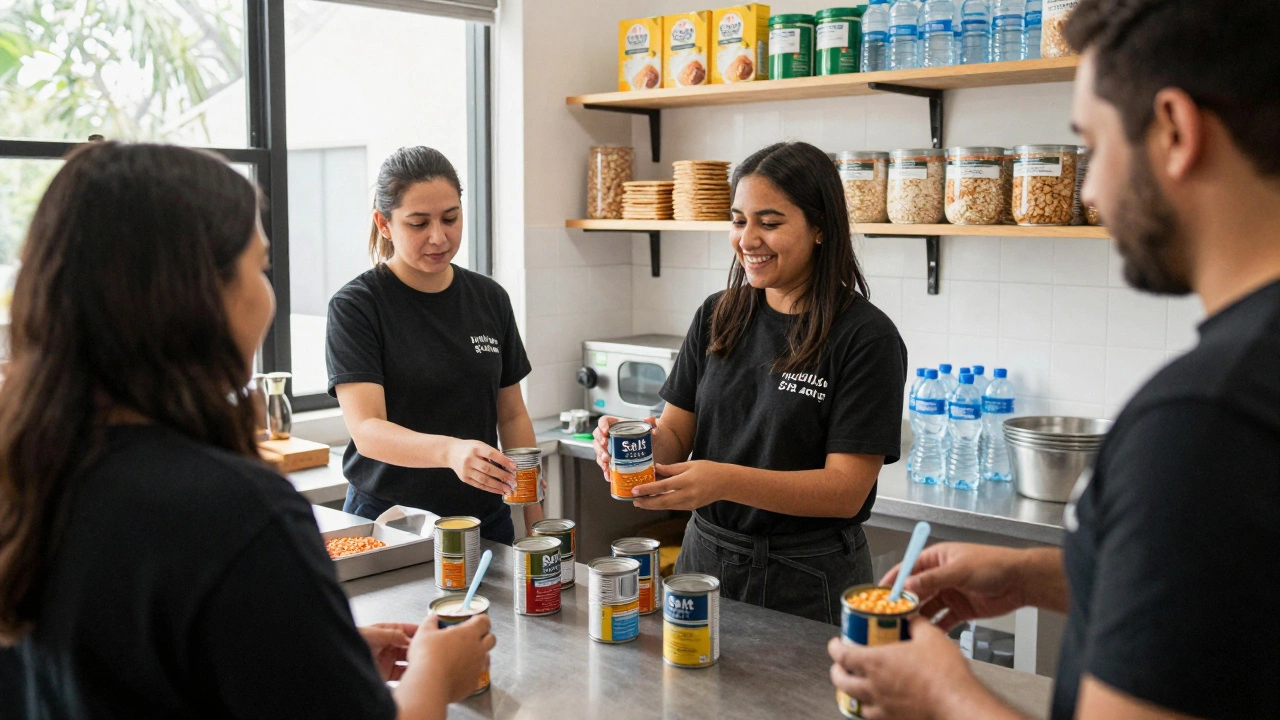
2. Canned beans or lentils (no salt added) Beans are cheap, shelf-stable, and packed with fiber and plant-based protein. They help regulate blood sugar and keep people full longer. Look for cans labeled “no salt added” or “low sodium.” Rinse them before giving if possible-this cuts sodium by up to 40%.Many shelters now hand out small cans of beans with a plastic spoon. It’s simple, but it’s one of the most requested items.
3. Fresh fruit (bananas, apples, oranges) Fruit is nature’s fast food. Bananas are easy to carry, don’t bruise easily, and give a natural sugar boost without a crash. Apples and oranges last longer than berries and don’t need refrigeration. Avoid pre-cut fruit-it spoils fast and isn’t safe without proper storage.A single banana can provide potassium, vitamin B6, and fiber in one bite. That’s more than most meals given at shelters.
4. Nut butter packets (single-serving) Peanut butter or almond butter in small, sealed packets is a game-changer. They’re calorie-dense, don’t spoil, and can be eaten straight from the packet. They’re also great mixed into oatmeal or spread on crackers.Choose natural nut butters with no added sugar or hydrogenated oils. A 2024 study from the University of Melbourne found that people who received daily nut butter packets reported better energy levels and fewer hunger pangs within two weeks.
5. Bottled water (not soda or energy drinks) Hydration is often overlooked. Many homeless people drink soda or cheap energy drinks because they’re free or cheap. But those drinks dehydrate you, spike blood sugar, and damage teeth. Clean, cold water is the most valuable thing you can give.Give it in small bottles (500ml) so it’s easy to carry. Large bottles get left behind. Always include water with meals-it helps digestion and reduces the risk of kidney problems.
What NOT to give
Some items sound helpful but cause real harm:- Energy drinks - High in sugar and caffeine. Can trigger anxiety, insomnia, or heart palpitations.
- Pre-cooked fried foods - Greasy, hard to digest, and often left uneaten because they’re too heavy.
- Chocolate bars or candy - Sugar crashes lead to fatigue and irritability. Not a sustainable energy source.
- Open or expired food - Never give food past its use-by date. It’s risky and disrespectful.
- Alcohol - Never. Ever.
Even well-meaning gestures like handing out a hot pie or a bag of donuts can do more harm than good. They’re tempting, but they’re not food-they’re temporary comfort with long-term costs.
What shelters actually need
If you’re thinking about donating food to a shelter, skip the random leftovers. Call ahead. Ask what they’re low on. Most shelters run on tight budgets and rely on donations that are:- Non-perishable
- Low in sodium and sugar
- Easy to prepare in bulk
- Safe for people with dietary restrictions
Shelters in Melbourne often list needs on their websites. Common requests include:
- Canned tuna or salmon (in water)
- Instant oatmeal (plain, not flavored)
- Granola bars (with less than 8g sugar)
- Whole grain crackers
- Low-sodium soups
Donating a box of these items is more helpful than handing out ten sandwiches over a week.
How to hand it out respectfully
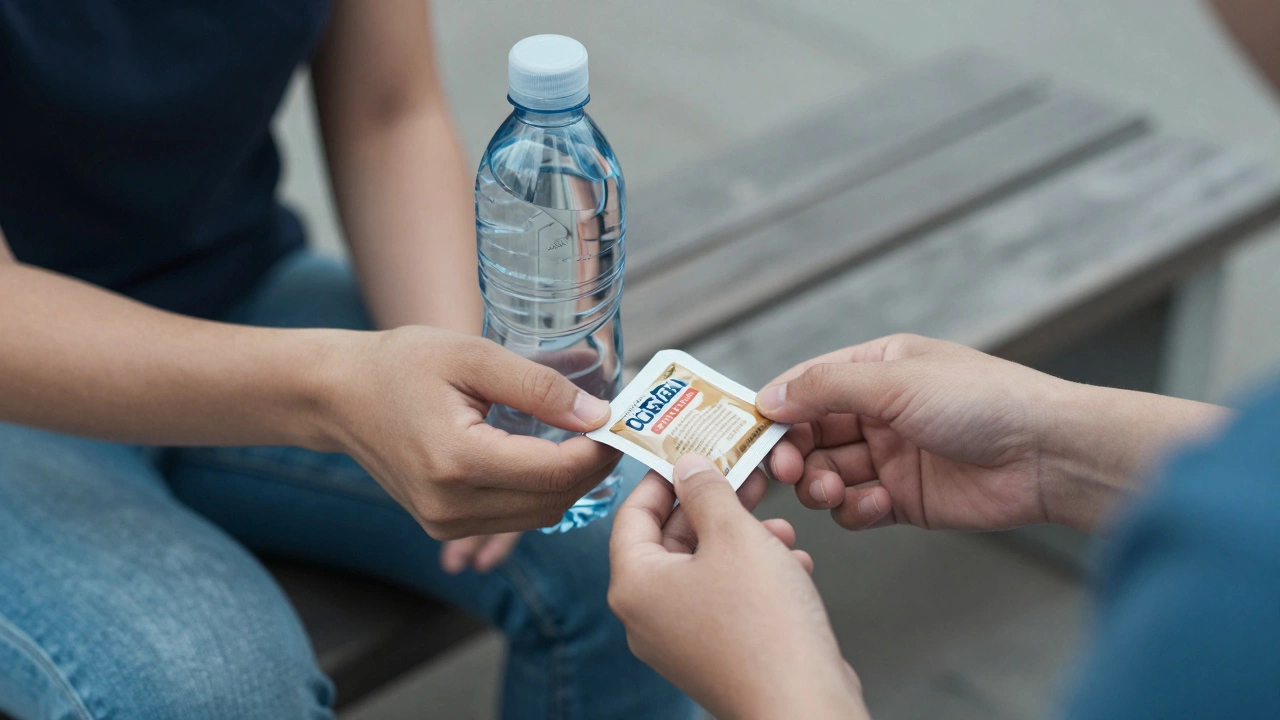
Giving food isn’t just about what you give-it’s about how you give it.- Don’t assume someone is hungry. Ask: “Would you like something to eat?”
- Offer it with eye contact, not from a distance. A simple “Here you go” means more than silence.
- Don’t apologize for giving “just” food. People don’t want pity-they want dignity.
- Include a note: “Hope this helps.” It costs nothing, but it changes the tone.
One woman in Carlton told a volunteer: “I’ve been given sandwiches wrapped in plastic. I’ve been given soda and candy. No one ever said ‘I hope this helps.’ That one phrase made me feel like a person, not a problem.”
What’s next? Beyond food
Food is just one piece. People experiencing homelessness need housing, healthcare, mental health support, and jobs. But if you’re only able to help with food right now, do it right.Good food doesn’t just fill a stomach. It reminds someone they’re still part of the human community. It says: you matter. You’re worth nourishing.
Next time you’re at the store, skip the snack aisle. Head for the canned goods, the fruit section, the water bottles. Pick five things that will actually help. Then give them with care.
Can I give hot food to someone sleeping outside?
It’s risky. Hot food cools quickly and can become unsafe to eat. If you want to give hot food, pair it with a thermos that keeps it above 60°C for at least 4 hours. Otherwise, stick to room-temperature, shelf-stable options like sandwiches, fruit, or nut butter packets. Many shelters have warming stations-donate to them instead.
Is it better to give money or food?
It depends. If you’re unsure what someone needs, cash gives them choice. But if you’re giving food, you can ensure it’s nutritious. For shelters, cash donations are more flexible-they can buy in bulk, get discounts, and avoid waste. If you’re donating to a person directly, a sandwich with water is often more helpful than $5, because it’s immediate and safe.
What if someone has dietary restrictions?
Many people with homelessness have diabetes, celiac disease, or food allergies. Avoid common allergens like peanuts unless you know the person is okay with them. Stick to simple, unprocessed foods: plain oats, canned beans, bananas, bottled water. These are least likely to cause reactions. If you’re donating to a shelter, ask if they accommodate special diets-they usually do.
Do shelters accept expired food?
No. Food past its use-by date is never accepted. Use-by dates are safety rules, not suggestions. Expired canned food can cause botulism. Expired dairy or meat can cause severe illness. Even if it looks fine, it’s not worth the risk. Always check dates before donating.
Can I donate homemade food?
Most shelters can’t accept homemade food due to health regulations. Even if it’s safe, they can’t verify how it was stored or handled. Stick to store-bought, sealed items. Some shelters run cooking programs where volunteers prepare meals under health department supervision. If you want to cook, volunteer with them instead.