What Are the 7 Main Types of Ecosystems? A Complete Guide
 May, 29 2026
Ecosystem Knowledge Quiz
Loading question...
Quiz Complete!
See how well you know the ecosystems.
Walk outside right now. Look at the ground beneath your feet or the sky above your head. You are standing inside a living, breathing machine. Scientists call this an ecosystem, which is a community of living organisms interacting with their physical environment. It isn't just about trees and animals; it’s about how rain feeds roots, how roots feed insects, and how insects feed birds. Everything is connected.
When people ask about the "seven main types" of ecosystems, they are usually looking for a way to categorize the vast diversity of life on Earth. While ecologists often split things into two broad buckets-terrestrial (land-based) and aquatic (water-based)-breaking it down further helps us understand how different environments work. By grouping them into seven distinct categories, we can see the unique rules that govern deserts, oceans, forests, and even your backyard pond.
1. Forest Ecosystems: The Lungs of the Planet
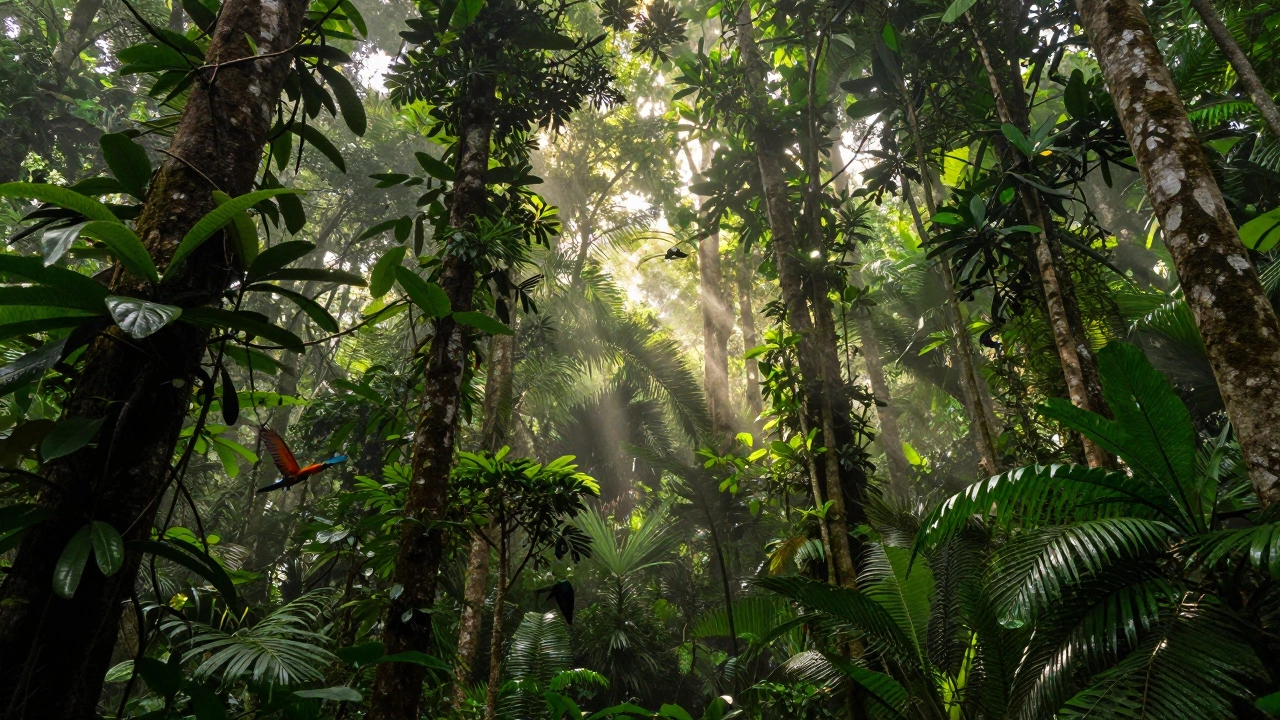
Forests cover about 31% of the global land area. They are dense, complex, and incredibly productive. If you think of an ecosystem as a factory, forests are the heavy industrial plants of the natural world. They produce massive amounts of oxygen and store huge amounts of carbon.
Forest ecosystems are generally divided into three sub-types based on climate:
- Tropical Rainforests: Found near the equator, these are hot and wet year-round. They hold more than half of the world's plant and animal species, despite covering only a small fraction of the land surface. Think of places like the Amazon Basin in South America or the Congo Basin in Africa.
- Temperate Deciduous Forests: These forests experience four distinct seasons. Trees lose their leaves in winter to conserve water. You find these in eastern North America, Europe, and East Asia. Oak, maple, and beech are common trees here.
- Boreal Forests (Taiga): Located in high northern latitudes, these are the largest land biome on Earth. They are cold, have short growing seasons, and are dominated by coniferous trees like pine, spruce, and fir. Canada and Russia hold most of the taiga.
The key feature of all forest ecosystems is the canopy. This layer of leaves blocks sunlight from reaching the forest floor, creating a dark, humid understory where specialized plants and animals survive. Without the canopy structure, the entire food web would collapse.
2. Grassland Ecosystems: The Great Open Spaces
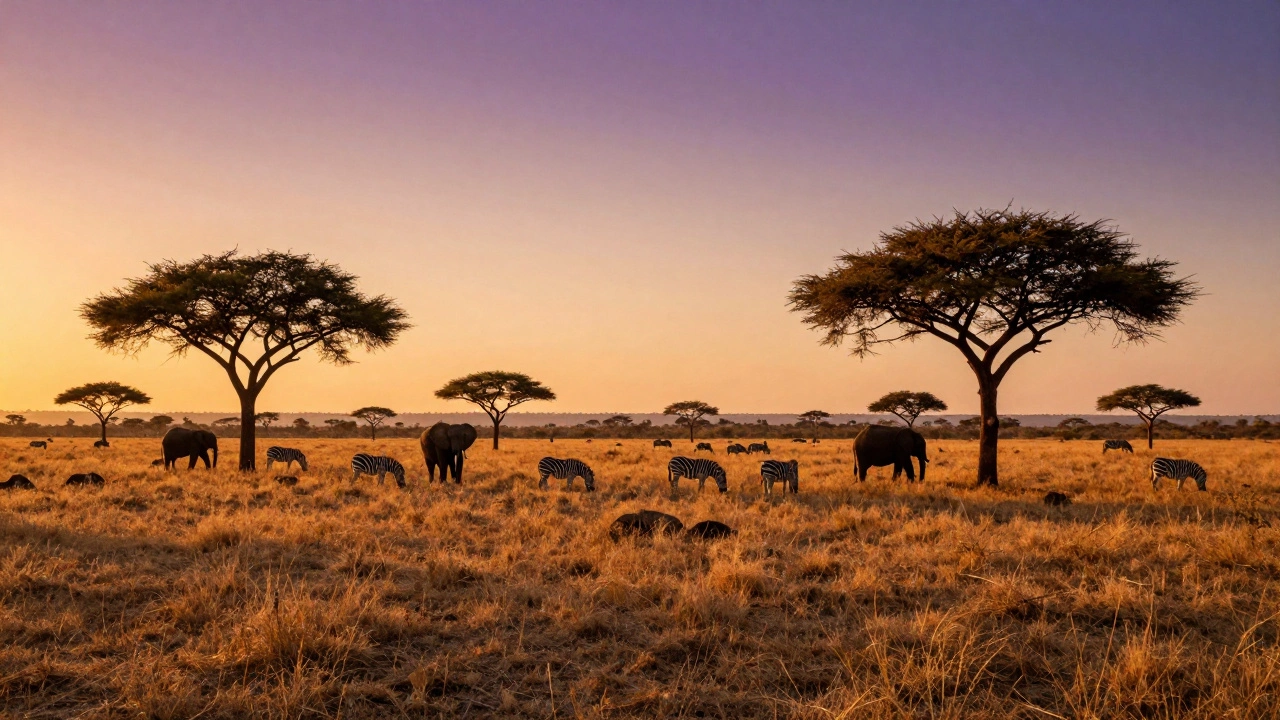
If forests are about vertical growth, grasslands are about horizontal spread. These ecosystems are defined by a lack of trees and shrubs, replaced by vast expanses of grasses and herbs. Why no trees? Usually, it comes down to rainfall. Grasslands get enough rain to support plants but not enough to sustain a forest, or frequent fires prevent tree saplings from taking root.
There are two primary types of grasslands:
- Tropical Grasslands (Savannas): Hot year-round with distinct wet and dry seasons. Scattered trees dot the landscape. The African savanna is the classic example, home to lions, elephants, and zebras.
- Temperate Grasslands (Prairies/Steppes): These have hot summers and cold winters. They are found in the central United States, Argentina, and Ukraine. The soil here is incredibly rich and fertile, which is why much of the world's breadbasket lies on former prairie land.
In grassland ecosystems, the real action happens underground. The root systems of grasses are deep and extensive, holding the soil together and storing carbon. When you drive across the Midwest US, you are driving over miles of interconnected root networks that stabilize the earth against wind erosion.
3. Desert Ecosystems: Life in Extremes
Deserts make up about one-third of the Earth's land surface. The defining characteristic is low precipitation-usually less than 10 inches (25 cm) per year. But don't mistake "dry" for "dead." Deserts are full of life, but that life has adapted to extreme conditions.
Organisms in desert ecosystems have evolved remarkable survival strategies. Cacti store water in their thick stems. Camels can go weeks without drinking. Many desert animals are nocturnal, sleeping in cool burrows during the day and coming out at night to hunt.
Deserts aren't always hot. Cold deserts, like the Gobi in Asia or Antarctica, receive very little moisture but freeze solid in winter. In both hot and cold deserts, water is the limiting factor. Every interaction in the ecosystem revolves around finding, conserving, or extracting water from the environment.
4. Tundra Ecosystems: The Frozen Frontier
The tundra is the coldest, driest, and windiest of all biomes. It is located in the high Arctic and on high mountain peaks (alpine tundra). The word "tundra" comes from a Finnish word meaning "treeless plain." And true to its name, there are no trees because the active layer of soil-the part that thaws in summer-is too shallow for tree roots.
Key features of the tundra include:
- Permafrost: A permanently frozen subsoil that prevents drainage and keeps the ground soggy in summer.
- Short Growing Season: Plants have only 50 to 60 days to grow, flower, and seed before the freeze returns.
- Low Biodiversity: Few species live here, but those that do, like caribou, musk oxen, and polar bears, are highly adapted to the cold.
The tundra is fragile. Because the soil takes centuries to form, trampling or oil spills can cause damage that lasts decades. As global temperatures rise, the permafrost is beginning to thaw, releasing trapped methane and altering the delicate balance of this ecosystem.
5. Freshwater Ecosystems: Rivers, Lakes, and Wetlands
While oceans dominate the planet's surface, freshwater ecosystems are critical for human survival. They contain less than 1% of the Earth's water but support a huge variety of life. Freshwater ecosystems are divided into two main groups: lotic (flowing water) and lentic (still water).
Lotic systems include rivers and streams. The flow of water shapes the ecosystem. Fish like trout need fast-moving, oxygen-rich water. Plants must anchor themselves firmly against the current.
Lentic systems include lakes, ponds, and marshes. Here, water is relatively still. Light penetration determines life zones. Near the surface, algae and phytoplankton thrive. Deeper down, where light doesn't reach, bacteria break down dead organic matter falling from above.
Wetlands, such as swamps and bogs, sit between land and water. They act as natural sponges, filtering pollutants from water and reducing flood risks. Despite covering only a small portion of the land, wetlands are among the most productive ecosystems on Earth, supporting countless bird species and amphibians.
6. Marine Ecosystems: The Vast Oceans
The ocean covers more than 70% of the Earth's surface. Marine ecosystems are salty and range from the sunlit surface to the crushing darkness of the deep sea. They are vital for regulating the global climate and producing over half of the world's oxygen through phytoplankton.
We can break marine ecosystems into several zones:
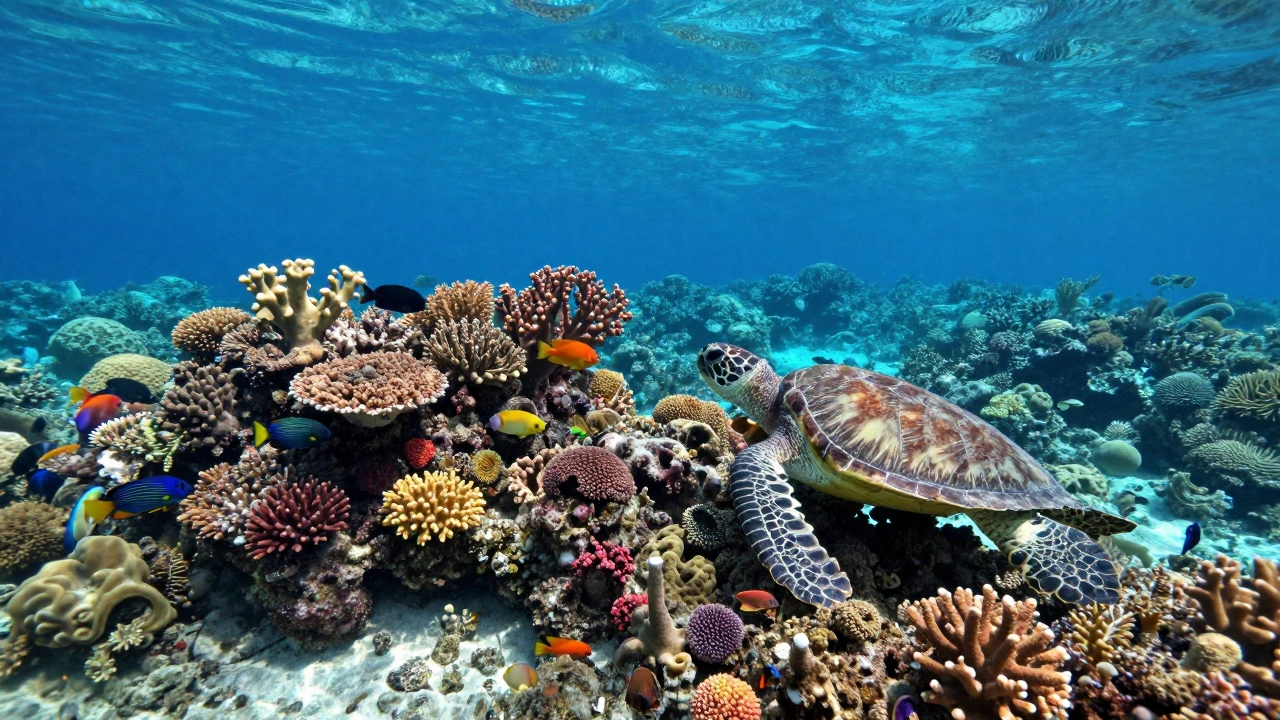
- Coral Reefs: Often called the "rainforests of the sea," reefs are built by tiny animals called corals. They support 25% of all marine species, including fish, crustaceans, and mollusks. They require warm, clear, shallow water.
- Estuaries: Where rivers meet the sea. The mixing of fresh and saltwater creates nutrient-rich environments that serve as nurseries for many fish and shellfish species.
- Open Ocean (Pelagic Zone): The vast middle of the sea. Life here ranges from tiny plankton to massive whales. Sunlight only penetrates the top 200 meters, so life below that depth relies on "marine snow"-dead matter falling from above.
- Deep Sea: Dark, cold, and under immense pressure. Creatures here have adapted with bioluminescence (making their own light) and slow metabolisms to survive on scarce food resources.
Marine ecosystems are currently facing significant threats from acidification, caused by the absorption of excess carbon dioxide from the atmosphere, which dissolves the shells of coral and shellfish.
7. Estuarine Ecosystems: The Transition Zones
Sometimes categorized under marine or freshwater, estuaries deserve their own spot because they are unique hybrid environments. An estuary is a partially enclosed coastal body of brackish water with one or more rivers or streams flowing into it, and with a free connection to the open sea.
The salinity in an estuary changes constantly with the tides and river flow. This makes it a challenging environment, but also a highly productive one. Nutrients from the land mix with minerals from the sea, triggering explosive growth of algae and plants. This food base supports shrimp, crabs, oysters, and countless fish species.
For humans, estuaries are economic powerhouses. Major ports are often located in estuaries because they provide sheltered deep-water access. However, they are also vulnerable to pollution from both land runoff and maritime activities. Protecting estuaries means protecting the health of both the land and the ocean.
| Ecosystem Type | Key Characteristic | Climate/Conditions | Example Species |
|---|---|---|---|
| Forest | Dense tree canopy | Varies (Tropical to Boreal) | Oak, Tiger, Parrot |
| Grassland | Grasses, few trees | Moderate rainfall, seasonal | Wheat, Bison, Lion |
| Desert | Low precipitation | Extreme heat or cold, dry | Cactus, Camel, Fennec Fox |
| Tundra | Permafrost, treeless | Very cold, short summer | Moss, Caribou, Polar Bear |
| Freshwater | Low salinity water | Rivers, lakes, wetlands | Trout, Lily Pad, Frog |
| Marine | High salinity water | Oceans, reefs, deep sea | Coral, Whale, Shark |
| Estuarine | Brackish water (mix) | Coastal, tidal influence | Oyster, Salmon, Heron |
Why Understanding These Types Matters
Knowing the difference between a taiga and a tropical rainforest isn't just academic trivia. Each ecosystem provides specific services that keep our planet habitable. Forests regulate air quality. Wetlands filter water. Oceans control temperature. When we lose one type of ecosystem, we don't just lose a few species; we lose a function that sustains life globally.
Conservation efforts must be tailored to the specific needs of each ecosystem type. You cannot save a coral reef with the same methods used to protect a grassland. By understanding these seven main types, we can better appreciate the complexity of nature and take more effective action to preserve it.
What is the difference between a biome and an ecosystem?
A biome is a large geographical area characterized by specific climate conditions and dominant plant life, such as a desert or tundra. An ecosystem is a smaller, functional unit within a biome where living organisms interact with each other and their physical environment. For example, the Sahara Desert is a biome, while a specific oasis within it, complete with its own plants, animals, and water sources, is an ecosystem.
Which ecosystem is the most biodiverse?
Tropical rainforests are generally considered the most biodiverse terrestrial ecosystems, housing more than half of the world's known species. In marine environments, coral reefs are often cited as having the highest biodiversity, supporting approximately 25% of all marine life despite covering less than 1% of the ocean floor.
Are urban areas considered ecosystems?
Yes, urban areas are increasingly recognized as unique ecosystems. They consist of human-made structures, non-native plant species, and adapted wildlife like pigeons, rats, and raccoons. Urban ecosystems rely heavily on external energy inputs (electricity, food imports) and face challenges like pollution and heat islands, but they still follow ecological principles of energy flow and nutrient cycling.
How do freshwater and marine ecosystems differ?
The primary difference is salinity. Freshwater ecosystems have very low salt concentrations (less than 1%), while marine ecosystems have high salt concentrations (about 3.5%). This affects the types of organisms that can live there, as many species are specially adapted to handle either low or high osmotic pressure. Additionally, marine ecosystems are influenced by tides and currents, whereas freshwater systems are shaped by gravity-driven flow and local weather patterns.
What is the role of decomposers in these ecosystems?
Decomposers, such as bacteria and fungi, are crucial in all seven ecosystem types. They break down dead organic matter, recycling nutrients like nitrogen and phosphorus back into the soil or water. Without decomposers, ecosystems would be buried in waste, and new plants would lack the essential nutrients needed to grow, causing the entire food web to collapse.