The Most Immediate Threat to Life on Earth: Climate Change and Ecosystem Collapse
 Jul, 7 2026
Existential Threat Comparison Tool
Select two threats below to see a side-by-side comparison of their characteristics and risks.
Climate Change
Decades (Immediate impacts)
Partially ReversibleBiodiversity Loss
Ongoing (Irreversible losses)
Largely IrreversibleNuclear War
Instantaneous
Long-term FalloutPandemics
Months to Years
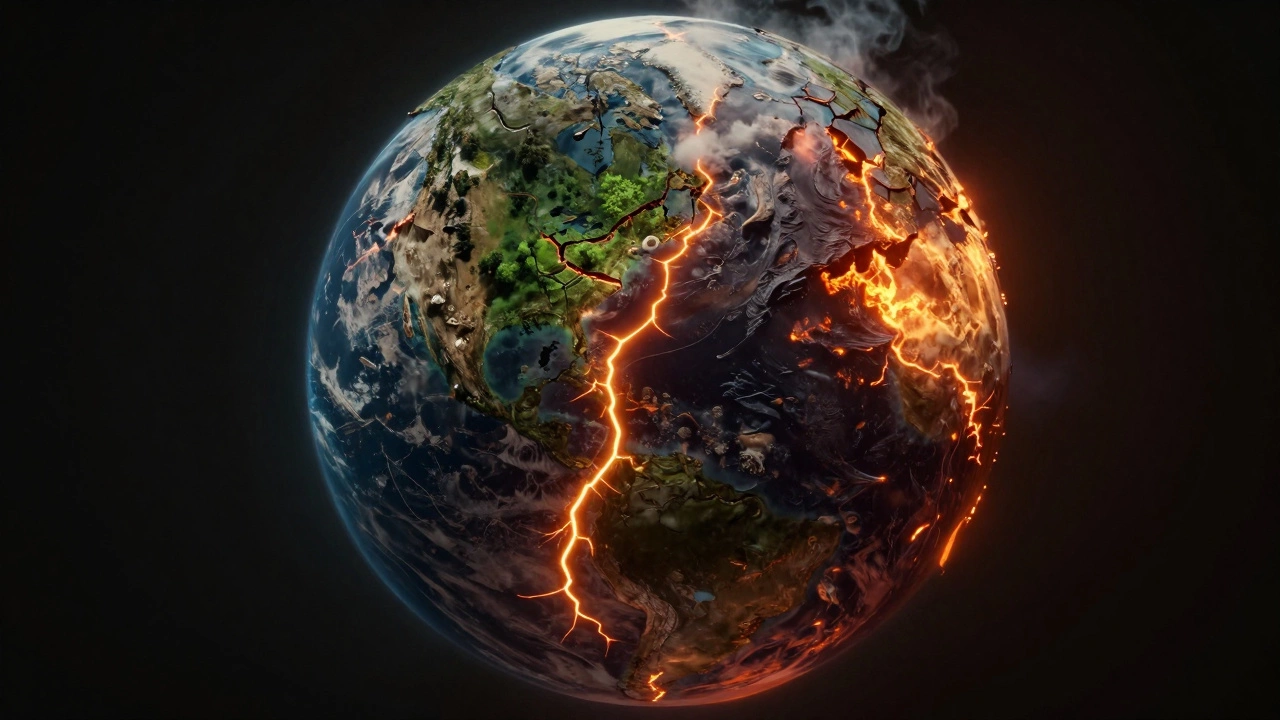
ManageableYou might be looking for a single villain-a specific virus, a rogue nation, or a supervillain with a doomsday device. But the most immediate threat to all life on Earth isn’t a character from a movie script. It is a slow, compounding system failure that we are actively accelerating. While asteroids and supervolcanoes make for terrifying headlines, they are statistical outliers. The real danger is something far more predictable and entirely within our control: the simultaneous collapse of our climate systems and biological networks.
When scientists talk about existential risk, they aren’t just talking about human extinction. They are talking about the stability of the biosphere-the complex web of interactions that allows complex life, including humans, to exist. Right now, that web is fraying at multiple points simultaneously. The urgency comes not from one isolated event, but from the synergy of these crises. Heatwaves don’t just kill people; they dry out forests, which then burn, releasing carbon, which causes more heat. It is a feedback loop that moves faster than our political systems can adapt.
The Core Crisis: Climate Disruption
At the center of this storm is Climate Change, driven primarily by the accumulation of greenhouse gases in the atmosphere. This is no longer a future prediction; it is the current operating system of our planet. We have already pushed global average temperatures approximately 1.2°C above pre-industrial levels. That number sounds small until you realize that the difference between an ice age and a warm period is often less than 5°C globally.
The immediate threat here is not just higher temperatures, but instability. Weather patterns are becoming erratic. We see this in the intensification of tropical cyclones, the lengthening of fire seasons across Australia and California, and the sudden onset of floods in regions previously known for drought. These events disrupt food production, displace populations, and strain infrastructure. When the physical environment becomes unpredictable, the foundation of civilization-agriculture and trade-begins to crack.
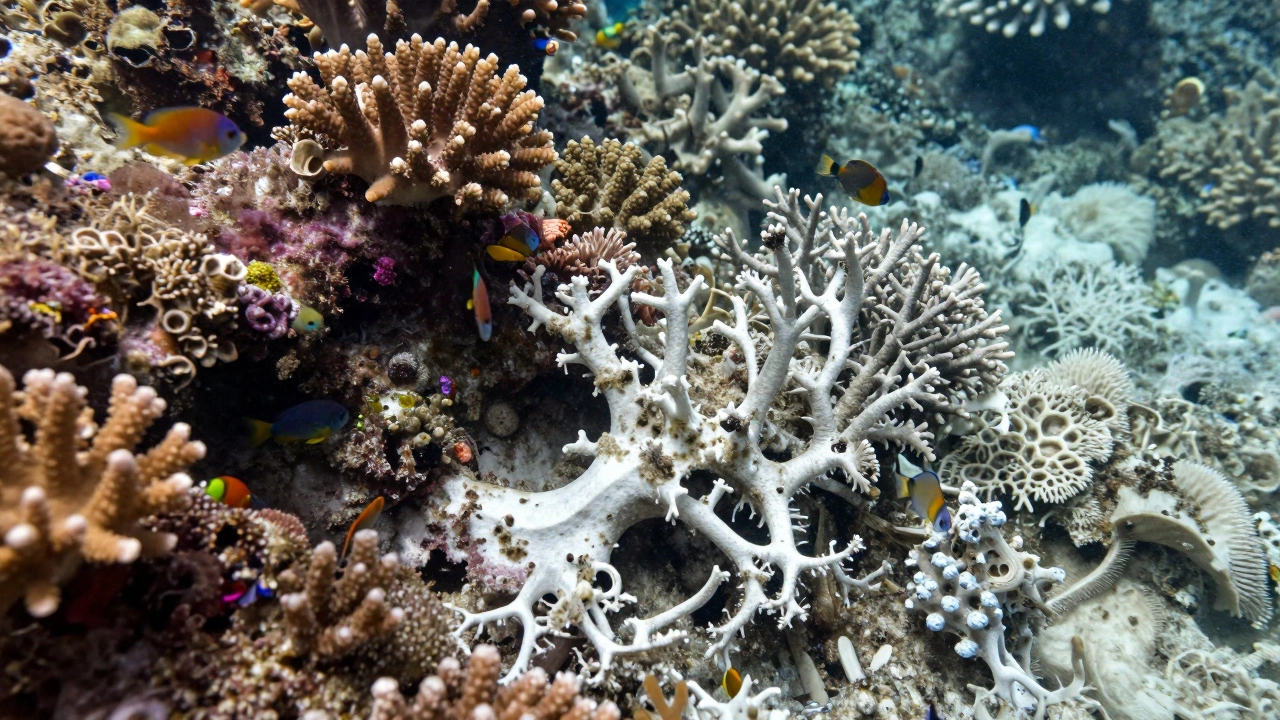
Consider the oceans. They absorb about 90% of the excess heat trapped by greenhouse gases and roughly 30% of the carbon dioxide we emit. This service has kept the atmosphere somewhat habitable, but the cost is high. Oceans are warming and acidifying. Coral reefs, which support 25% of all marine life despite covering less than 1% of the ocean floor, are undergoing mass bleaching events. When these ecosystems collapse, the fisheries that billions of people rely on for protein collapse with them. This is not an ecological footnote; it is a direct threat to global food security.
The Silent Killer: Biodiversity Loss
If climate change is the fever, Biodiversity Loss is the organ failure. We are currently living through what many biologists call the Sixth Mass Extinction. Unlike previous extinctions caused by asteroids or volcanic winters, this one is driven by human activity: habitat destruction, pollution, overexploitation, and invasive species.
Biodiversity is not just about saving cute animals. It is about resilience. A diverse ecosystem is like a diversified investment portfolio; if one asset fails, others can compensate. A monoculture farm, however, is vulnerable to a single pest or disease. Nature works the same way. Pollinators like bees and butterflies transfer pollen between plants, enabling reproduction. If pollinator populations crash due to pesticide use and habitat loss, crop yields plummet. We see early signs of this in declining bee colonies worldwide.
Furthermore, intact ecosystems regulate water cycles, prevent soil erosion, and filter pollutants. Wetlands act as natural sponges during floods. Mangroves protect coastlines from storm surges. When we drain wetlands or cut down mangroves for development, we remove these free services and replace them with expensive, often inadequate, engineering solutions. The loss of biodiversity reduces the planet’s capacity to recover from shocks, making us all more vulnerable to the very climate disruptions mentioned earlier.
Human Systems as Amplifiers
Nature doesn’t fail in a vacuum. Human systems amplify environmental threats. Our global economy is still largely built on the extraction and burning of fossil fuels. This economic model prioritizes short-term growth over long-term sustainability. When a region experiences a drought, the impact is magnified by supply chain dependencies. A shortage of wheat in Ukraine or India doesn’t just affect local farmers; it spikes prices in Egypt and Lebanon, leading to social unrest and migration crises.
Urbanization plays a role too. Cities concentrate population and resources, making them efficient but also fragile. Heat islands in urban areas can be several degrees hotter than surrounding rural areas, exacerbating health risks during heatwaves. Infrastructure designed for historical weather patterns is failing under new extremes. Roads buckle, power grids overload, and sewage systems overflow. The threat is immediate because our infrastructure is aging while the stresses on it are increasing.
| Threat Type | Timeframe | Primary Driver | Reversibility |
|---|---|---|---|
| Climate Change | Decades (Immediate impacts) | Greenhouse Gas Emissions | Partially reversible over centuries |
| Biodiversity Loss | Ongoing (Irreversible losses) | Habitat Destruction & Pollution | Largely irreversible (extinction is permanent) |
| Nuclear War | Instantaneous | Geopolitical Conflict | Long-term environmental fallout |
| Pandemics | Months to Years | Viral Mutation/Zoonotic Spillover | Manageable with medical intervention |
The Feedback Loops: Why It Gets Worse Faster
The scariest aspect of the current environmental crisis is the presence of tipping points. These are thresholds where a small change triggers a large, often irreversible, shift in the system. One major example is the permafrost in the Arctic. As temperatures rise, frozen ground thaws, releasing methane-a greenhouse gas significantly more potent than carbon dioxide in the short term. This methane causes further warming, which thaws more permafrost. This is a positive feedback loop that operates independently of human emissions once triggered.
Another critical tipping point involves the Amazon Rainforest. Often called the lungs of the Earth, the Amazon actually recycles its own rainfall. Deforestation reduces transpiration, leading to drier conditions. If deforestation reaches a certain percentage (estimated between 20-25%), parts of the rainforest could transition into savanna. This would release vast amounts of stored carbon and destroy one of the planet’s largest reservoirs of biodiversity. We are dangerously close to this threshold.
These loops mean that the problem is not linear. Doubling our efforts today does not necessarily double the benefit tomorrow if we cross a tipping point. The window for preventing catastrophic outcomes is narrowing because the systems themselves are starting to drive the change, rather than just reacting to human inputs.
Why Other Threats Are Secondary
It is worth addressing other common fears. Nuclear war remains a significant risk, but the probability of a full-scale exchange that wipes out all life is low compared to the certainty of climate disruption. Artificial intelligence poses potential risks, but these are speculative and controllable through regulation and design. Asteroid impacts are monitored by space agencies, and mitigation strategies exist. The threat of AI or asteroids is episodic; the threat of environmental collapse is continuous and cumulative.
Pandemics are a reminder of our vulnerability to pathogens. However, zoonotic diseases (those jumping from animals to humans) are often facilitated by the same drivers of biodiversity loss. Encroachment into wild habitats increases contact between humans and novel viruses. Therefore, addressing environmental degradation also mitigates pandemic risk. The root cause is often the same: our unsustainable relationship with the natural world.
Pathways to Mitigation
Recognizing the threat is the first step, but action is required. The good news is that solutions exist. Transitioning to renewable energy sources like solar and wind is now economically viable in most parts of the world. Improving energy efficiency in buildings and industry can reduce demand without sacrificing comfort. Protecting and restoring natural habitats enhances biodiversity and sequesters carbon. Shifting towards plant-rich diets reduces pressure on land and water resources.
Individual actions matter, but systemic change is crucial. Policies that price carbon emissions incentivize cleaner technologies. Regulations that protect endangered species and their habitats preserve ecological integrity. International cooperation is essential because climate change and biodiversity loss respect no borders. The Paris Agreement and the Kunming-Montreal Global Biodiversity Framework are steps in the right direction, but implementation needs to accelerate.
We are not powerless. History shows that societies can adapt and innovate when faced with challenges. The ozone layer hole was healed through global cooperation banning chlorofluorocarbons. Acid rain was reduced through emissions controls. These successes prove that collective action works. The scale of the current challenge is larger, but the principles remain the same: science-based policy, international collaboration, and public engagement.
Is climate change really the biggest threat to humanity?
Yes, climate change is widely considered the most significant long-term threat because it affects every other sector, including food security, water availability, health, and economic stability. Its impacts are global, persistent, and accelerating, making it a multiplier of other risks.
How does biodiversity loss affect daily life?
Biodiversity loss impacts daily life by threatening food supplies (through pollinator decline), reducing clean water access (due to degraded watersheds), and increasing the risk of infectious diseases. Healthy ecosystems provide essential services that modern society relies on, often invisibly.
What are tipping points in the context of environmental collapse?
Tipping points are thresholds beyond which a system undergoes a rapid, often irreversible change. Examples include the melting of Arctic ice reducing the Earth's reflectivity, or the Amazon rainforest drying out. Once crossed, these changes continue even if the initial driver is removed.
Can technology alone solve the environmental crisis?
Technology is a vital tool, but it is not a silver bullet. Solutions require behavioral changes, policy reforms, and economic shifts. Relying solely on future technological breakthroughs risks delaying necessary actions and crossing critical environmental thresholds.
Why is the year 2026 significant for environmental action?
2026 represents a critical juncture where many national and international climate commitments are due for review or implementation. The window to limit warming to 1.5°C is closing rapidly, making decisions made in the mid-2020s pivotal for determining the trajectory of the next century.