How Does a Charitable Trust Work? A Simple Guide to Structure and Benefits
 May, 15 2026
Charitable Structure & Cost Estimator
Select a structure to see its key characteristics.
Charitable Trust
- Governance: Trust Deed & Trustees
- Liability: Personal (for trustees)
- Privacy: High (Private documents)
- Complexity: Medium
Estimate your initial outlay for setting up a charitable trust in Australia.
*Note: ACNC Registration is free. Ongoing accounting costs are not included.
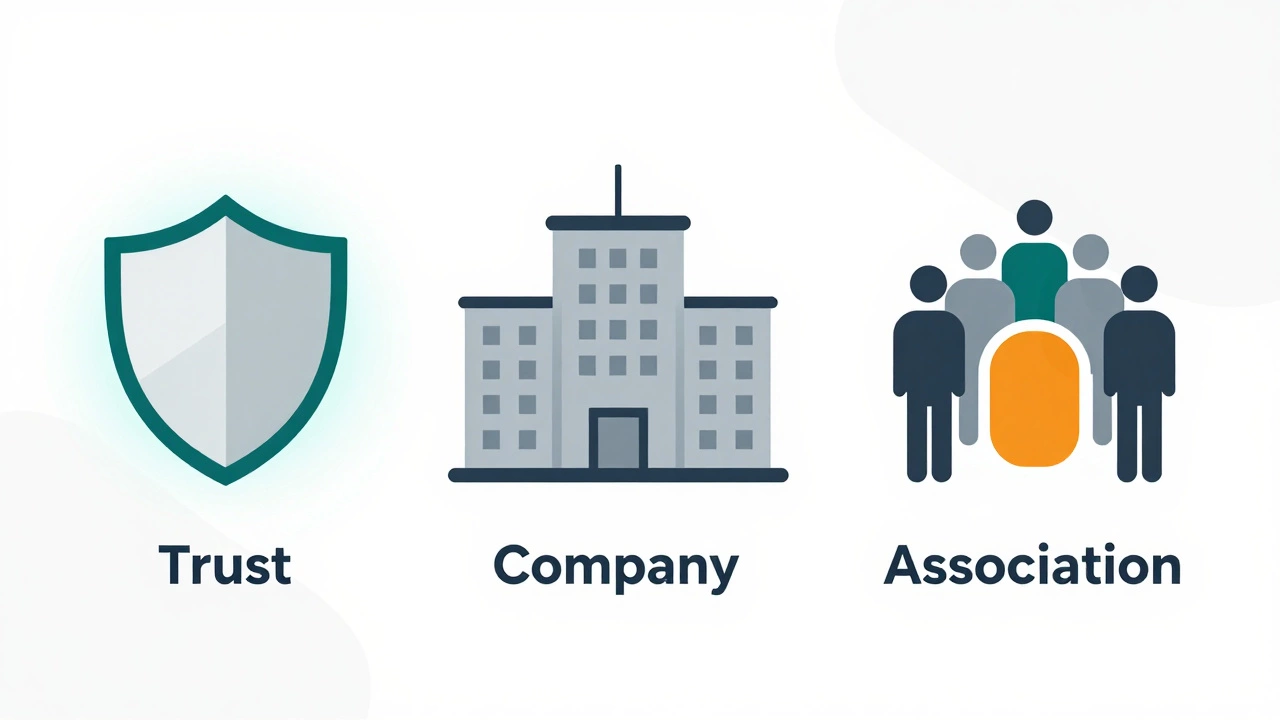
Imagine you want to leave a lasting impact on your community, but you aren't sure if setting up a formal organization is the right move. You might have heard of foundations, non-profits, or companies limited by guarantee, but there is one structure that often flies under the radar: the charitable trust. It is a legal arrangement where trustees hold assets for the benefit of a specific charitable cause rather than for personal profit. Unlike a company, it doesn’t have shareholders. Unlike an unincorporated association, it has a more rigid legal framework.
So, how does it actually work? At its core, a charitable trust is built on a promise. Someone (the settlor) gives money or property to a group of people (the trustees), who are legally bound to manage those resources strictly for a defined public benefit. This separation between ownership and control is what makes trusts unique and powerful tools for philanthropy.
The Core Components of a Charitable Trust
To understand how this machine runs, you need to look at its three main gears. Without any one of them, the trust cannot function legally or effectively.
First, there is the Settlor. This is the person or entity that creates the trust and provides the initial funding. They draft the rules, known as the trust deed, which acts as the constitution for the entire operation. Think of the settlor as the architect; they design the blueprint but don't necessarily live in the house.
Second, we have the Trustees. These are the individuals or corporate bodies responsible for managing the trust’s assets. In Australia, trustees carry significant legal weight. They must act in good faith, avoid conflicts of interest, and ensure every dollar spent aligns with the trust's charitable purpose. If a trust fails, the trustees-not the beneficiaries-are usually the ones held accountable.
Third, there are the Beneficiaries. In a private trust, beneficiaries might be family members. In a charitable trust, however, the "beneficiary" is the public or a specific segment of it, such as students in need, local wildlife, or cancer research. You can't name your cousin as the sole beneficiary of a charitable trust; the benefit must be widespread enough to qualify as a public good.
| Feature | Charitable Trust | Company Limited by Guarantee | Unincorporated Association |
|---|---|---|---|
| Legal Personality | No (unless unit trust) | Yes | No |
| Governance | Trust Deed & Trustees | Constitution & Directors | Committee Rules |
| Liability | Personal (for trustees) | Limited to guarantee amount | Personal (for committee) |
| Complexity | Medium | High | Low |
Why Choose a Trust Over a Company?
You might wonder why anyone would choose a trust when companies offer limited liability. The answer lies in flexibility and privacy. A company limited by guarantee is a type of corporation owned by its members who guarantee to contribute a nominal amount if the company winds up. While robust, companies require annual meetings, complex reporting to ASIC (Australian Securities and Investments Commission), and public disclosure of director details.
A charitable trust, on the other hand, operates more quietly. There is no requirement to hold annual general meetings. The trust deed is a private document, meaning your strategic plans and financial details aren't publicly searchable in the same way. For smaller groups or families wanting to support a cause without the administrative burden of corporate governance, a trust is often the smoother path.
Additionally, trusts are excellent for holding specific assets. If you want to set aside a building or a large sum of cash specifically for scholarships, a trust locks those assets into that purpose forever. Even if the original founders pass away, the trust continues according to their written instructions. This permanence is a huge draw for legacy planning.
Tax Benefits and DGR Status
Let’s talk about the bottom line. One of the biggest reasons people set up charitable structures is for tax efficiency. However, simply creating a trust doesn’t automatically make it tax-exempt. To unlock real benefits, the trust needs to apply for Deductible Gift Recipient (DGR) status from the Australian Taxation Office (ATO).
Here is how the math works:
- Income Tax Exemption: Once registered as a charity with the ACNC (Australian Charities and Not-for-profits Commission), the trust generally pays no income tax on donations, investment income, or trading profits related to its charitable purposes.
- Donor Deductions: If the trust achieves DGR status, individuals and businesses can claim tax deductions for their donations. This is a massive incentive for fundraising. People are far more likely to give $1,000 if they know they only pay tax on $750 of it.
- Fringe Benefits Tax (FBT): Registered charities are exempt from FBT on most benefits provided to employees, such as salary packaging or minor gifts.
Without DGR status, you can still run a charitable trust, but you lose the ability to incentivize donors through tax breaks. This distinction is crucial for long-term sustainability.
The Role of the ACNC and Regulation
In Australia, the landscape changed significantly with the introduction of the ACNC is the independent national regulator for charities in Australia, established to oversee compliance and transparency. Before the ACNC, regulation was fragmented across states and territories. Now, all eligible entities must register here.
Registration isn't just paperwork; it’s a commitment to transparency. Depending on your annual revenue, you’ll need to submit annual returns. Small charities (under $1 million) have lighter reporting requirements, while larger entities face stricter scrutiny. The ACNC also maintains a public register, so anyone can check if your trust is legitimate and see its governing documents. This builds trust with potential donors and partners.
If a trust fails to comply-say, by spending funds on non-charitable activities or failing to lodge reports-the ACNC can impose penalties, suspend registration, or even wind up the trust. This regulatory pressure ensures that charitable assets remain focused on public benefit.
Practical Steps to Set Up Your Trust
Ready to start? Here is a realistic roadmap for getting a charitable trust off the ground in Australia.
- Define Your Purpose: Be specific. "Helping people" is too vague. "Providing after-school tutoring for low-income children in Melbourne" is clear and measurable. Your purpose must fall within recognized charitable categories: relief of poverty, advancement of education, advancement of religion, or other purposes beneficial to the community.
- Choose Trustees: You need at least two individuals or one corporate trustee. Ensure they understand their fiduciary duties. They should have relevant skills-finance, law, or program management-and be willing to commit time.
- Draft the Trust Deed: This is the most critical step. Hire a lawyer specializing in not-for-profit law. The deed should cover clauses for dissolution (what happens to assets if the trust closes), amendment procedures, and trustee powers. Don't copy-paste from the internet; a bad deed can haunt you for years.
- Register with ACNC: Apply online. You’ll need to provide details about your activities, finances, and governance. Approval can take several weeks.
- Apply for TFN and ABN: Get your Tax File Number and Australian Business Number from the ATO. Then, apply for DGR endorsement if you plan to solicit tax-deductible donations.
- Open a Bank Account: Most banks will require your ACNC registration certificate and trust deed before opening a business account.
Common Pitfalls to Avoid
Even with the best intentions, many new trusts stumble early on. Here are the traps to watch out for.
Private Benefit: Trustees cannot use trust assets for their own gain. Paying yourself a high salary or renting property from the trust at below-market rates is a breach of duty. All benefits must flow to the public.
Purpose Drift: Over time, organizations sometimes expand their goals beyond what the trust deed allows. If you started as a literacy charity and decide to fund environmental projects, you may be acting outside your legal authority. Amend the deed formally if your mission evolves.
Ignoring Governance: Holding regular trustee meetings and keeping minutes isn't just bureaucracy; it’s protection. Documented decisions show that trustees acted responsibly. If something goes wrong, those records prove due diligence.
Underfunding Operations: Many founders focus solely on programs and forget about admin costs. Accounting, insurance, and software subscriptions add up. Budget for overheads, or you’ll burn out trying to do everything for free.
When a Trust Might Not Be Right
A charitable trust isn't the silver bullet for every situation. If you anticipate needing to raise capital from investors, hire many staff members, or enter complex contracts, a company structure might be safer due to limited liability. Also, if you want a democratic model where members vote on issues, an incorporated association or company is more appropriate. Trusts are hierarchical; the trustees decide, and the beneficiaries receive.
Ultimately, the choice depends on your scale, risk tolerance, and long-term vision. For many small-to-medium initiatives, especially those driven by a single founder or family, the charitable trust offers the perfect balance of simplicity, control, and tax efficiency.
Can I dissolve a charitable trust?
Yes, but it is not straightforward. Because the assets belong to the public, you cannot simply take the money back. Upon dissolution, remaining assets must be transferred to another similar charitable organization. This process requires approval from the ACNC and strict adherence to the trust deed's dissolution clause.
Do trustees get paid in a charitable trust?
Generally, no. Trustees are expected to serve voluntarily. However, if the trust deed explicitly allows it, trustees can be reimbursed for reasonable out-of-pocket expenses incurred while performing their duties. Some professional trustees may charge fees, but this must be clearly outlined in the governing documents to avoid conflicts of interest.
What is the difference between a foundation and a trust?
Is a foundation different from a trust?
In common parlance, "foundation" often refers to a charitable trust or a company limited by guarantee. Legally, there is no distinct "foundation" structure in Australia. It is a descriptive term. Most foundations operate as either a trust or a company. The key difference lies in governance and liability, not the name.
How much does it cost to set up a charitable trust?
Costs vary widely. Drafting a custom trust deed with a lawyer can range from $1,500 to $5,000+. ACNC registration is free. You may also incur costs for obtaining an ABN/TFN (free) and bank account setup fees. Budget for ongoing accounting and annual reporting costs, which can run hundreds of dollars per year depending on complexity.
Can a charitable trust engage in political activities?
Charitable trusts must remain politically neutral. They cannot support or oppose specific political parties or candidates. However, they can advocate for policy changes if doing so directly furthers their charitable purpose (e.g., a health charity advocating for smoking bans). The advocacy must be incidental to the main goal, not the primary activity.