Do Volunteers Become Donors? The Real Conversion Rates and Why It Happens
 Apr, 14 2026
Volunteer-to-Donor Conversion Estimator
Estimated Projections
Enter your data and click calculate to see the potential financial conversion for your volunteer base.
To get a handle on the numbers, we have to look at the volunteer to donor conversion rate. While every nonprofit is different, industry data from sources like the Giving USA reports and various philanthropic studies suggest that volunteers donate at a rate often 2 to 3 times higher than non-volunteers. In some high-engagement organizations, as many as 25% to 50% of active volunteers eventually transition into financial contributors. For comparison, a cold lead from a social media ad might have a conversion rate of less than 1%.
Key Takeaways for Nonprofits
- Volunteers have a much higher propensity to give than the general public.
- The "investment of time" creates a psychological bond that makes financial giving feel natural.
- Conversion doesn't happen automatically; it requires a bridge from service to solicitation.
- Retention is higher for those who both volunteer and donate.
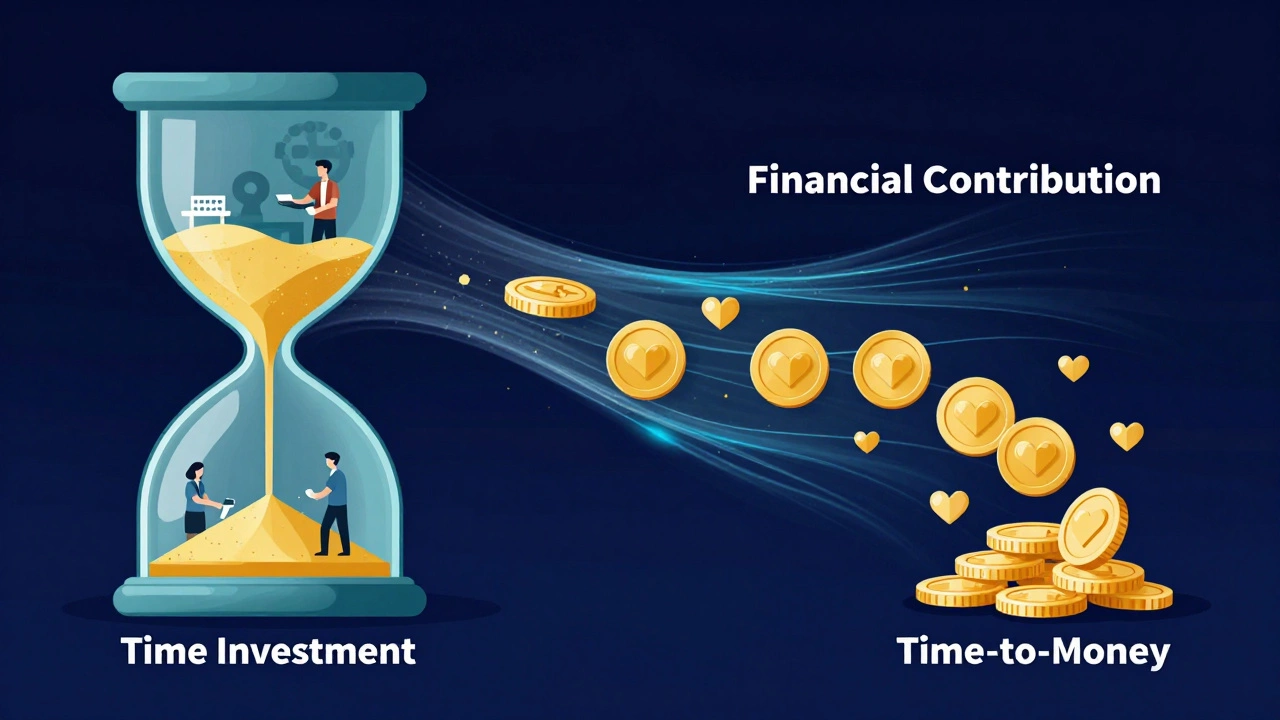
The Psychology of the "Time-to-Money" Pipeline
Why does someone who gives their time suddenly decide to give their money? It comes down to something called the "sunk cost's positive sibling": emotional investment. When a person spends ten hours a week at a food bank, they aren't just performing a task; they are witnessing the problem and the solution in real-time. They see the face of the person receiving the meal, which transforms a vague social issue into a concrete human need.
In the world of behavioral science, this is closely tied to the concept of Cognitive Dissonance. If someone spends a huge amount of energy supporting a cause, their brain wants to align all other actions with that belief. Giving money is the logical next step to reinforce their identity as a "supporter" of that mission. If they believe the mission is worth their Saturday, they usually believe it's worth twenty dollars a month.
Breaking Down the Conversion Numbers
If you're running a nonprofit, you can't just hope volunteers will donate. You need to understand the different tiers of engagement. Not every volunteer is the same, and their likelihood of becoming a donor varies based on their role.
| Volunteer Type | Time Investment | Estimated Conversion Rate | Primary Driver |
|---|---|---|---|
| One-time Event Volunteer | Low (1-4 hours) | 5% - 15% | Novelty / Social Pressure |
| Recurring Volunteer | Medium (Monthly) | 20% - 35% | Community Belonging |
| Core/Lead Volunteer | High (Weekly/Leadership) | 50% - 70% | Deep Mission Alignment |
As you can see, the depth of the relationship is the biggest predictor of financial support. A person who helps organize the annual gala is far more likely to donate than someone who just showed up to plant three trees and left. This suggests that the goal shouldn't just be "more volunteers," but "deeper engagement."
The Risk of the "Free Labor" Trap
There is a common fear among nonprofit managers: "If I ask my volunteers for money, will they stop volunteering?" It's a valid concern. There's a psychological phenomenon where some people feel that by giving their time, they have already "paid their dues." They might feel that asking for money is an insult to the hard work they've already put in.
The key is in the framing. You can't treat a volunteer like a generic lead in a CRM (Customer Relationship Management) system. If you send a mass email that says "Please donate now," you might alienate them. Instead, the approach should be rooted in partnership. For example, instead of a generic ask, try: "You've seen firsthand how many families we serve every Tuesday. To keep these meals free, we need to raise $500 by Friday. Would you be open to helping us reach that goal?"
Strategies to Move Volunteers Toward Giving
If you want to increase the percentage of volunteers who become donors, you need to build a bridge. You can't just jump from a shift at the warehouse to a request for a major gift.
- The "Impact Moment": During a volunteer shift, point out a specific need. "We're running low on these specific supplies; we usually buy them with donations." This connects the physical work to the financial need.
- Low-Barrier Entry: Don't ask for a $1,000 pledge right away. Encourage a small, recurring monthly gift. A $5 monthly donation is a psychological "yes" that cements their status as a donor.
- Recognition Programs: Create a special designation for those who both volunteer and donate. Calling them "Champions" or "Founders Circle" members makes the financial gift feel like an upgrade in status rather than a transaction.
- Peer-to-Peer Fundraising: Ask volunteers to start their own Crowdfunding campaign for the organization. When they ask their own friends for money, they almost always end up donating to their own page to lead by example.
Measuring Success Beyond the Dollar
While the conversion percentage is a great metric for the board, it doesn't tell the whole story. The real value of a volunteer-donor is their Lifetime Value (LTV). A donor who also volunteers is statistically much more likely to stay a donor for years. They have a "sticky" relationship with the organization.
Consider a scenario where you have two donors giving $100 a year. Donor A only receives a quarterly newsletter. Donor B volunteers at the shelter twice a month. If Donor A has a bad financial year, they might just stop the autopay. Donor B, however, is emotionally tied to the people they serve. They are more likely to find a way to keep giving, or at the very least, they'll continue volunteering, keeping the relationship alive until they can give again.

Common Pitfalls in Volunteer-Donor Conversion
Many organizations fail here because they silo their departments. The "Volunteer Coordinator" and the "Development Director" often operate in different worlds. The coordinator is focused on scheduling and logistics, while the director is focused on quotas and grants. When these two don't talk, volunteers feel like they are being handled by two different companies.
Another mistake is the "Ask Too Soon" error. If you ask for money during a person's very first hour of volunteering, it can feel like a bait-and-switch. They came to give their heart, and you immediately asked for their wallet. The sweet spot is usually after the third or fourth engagement, once the volunteer has felt the "win" of helping someone else.
Does asking volunteers for money make them quit?
Generally, no. Most volunteers understand that nonprofits require funding to operate. The risk occurs when the request is impersonal or aggressive. When the ask is framed as a way to amplify the impact they are already making through their service, it usually reinforces their commitment rather than diminishing it.
What is the best way to ask a volunteer to donate?
The most effective method is the "Observation Ask." During their service, point to a specific gap or need and explain how donations fill that gap. Following this up with a personalized email thanking them for their time and mentioning a specific funding goal is far more effective than a generic mass appeal.
Is there a specific percentage of volunteers that always donate?
There is no universal number because it depends on the cause. However, patterns show that high-commitment roles (like board members or team leads) often have conversion rates above 50%, while casual event volunteers usually hover between 5% and 15%.
Should I offer perks to volunteers who become donors?
Yes, but focus on "insider access" rather than material rewards. Offer them early access to events, a special badge, or a mention in the annual report. This validates their dual role as a contributor of both time and treasure.
How do I track volunteer-to-donor conversion?
The best way is to integrate your volunteer management software with your donor database. Tag every donor as "Volunteer," "Non-Volunteer," or "Both." This allows you to run reports on the average gift size and retention rate for each group to see the actual ROI of your volunteer program.
Next Steps for Your Organization
If you're seeing a low conversion rate, don't panic. Start by auditing your touchpoints. Are your volunteers being thanked personally? Do they know where the money goes? If you can prove that a $20 donation directly buys the supplies they are using during their shift, the conversion will happen naturally.
For those in leadership, try a "Dual-Track" experiment. Pick a small group of your most active volunteers and invite them to a private "Impact Briefing." Tell them exactly what the organization needs for the next six months. Give them the chance to be part of the solution financially. You'll likely find that these people are your most eager donors-they just needed an invitation that respected their existing contribution of time.