Can Your Surroundings Really Affect Your Health and Happiness?
 Jan, 2 2026
Surroundings Health Score Calculator
How Your Surroundings Impact Your Health
Based on scientific research from the University of Michigan, Harvard, and WHO, this tool calculates how your environment affects your physical and mental well-being. Complete the assessment to get personalized recommendations.
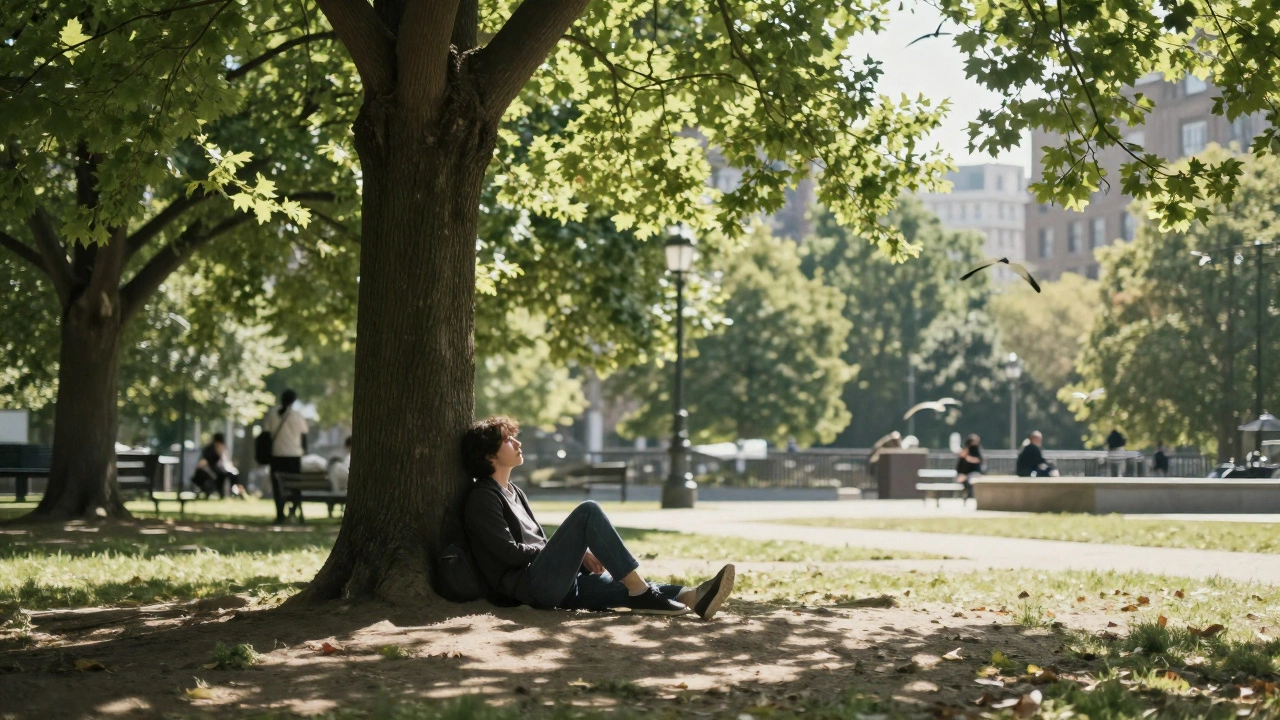
Ever notice how a cluttered room makes you feel stressed, but a walk through a park leaves you calm? It’s not just in your head. Your surroundings-what you see, hear, smell, and even feel-shape your mood, your focus, and even your long-term health. This isn’t just a feel-good idea. Real science backs it up. And if you’ve ever felt drained in a fluorescent-lit office or energized after sitting under a tree, you’ve already experienced it.
What Your Environment Is Doing to Your Brain
Your brain doesn’t separate "outside" from "inside." Every sound, light level, and air quality reading gets processed like a signal. A 2023 study from the University of Michigan found that people who spent just 20 minutes in a green space-like a park or forest-had significantly lower levels of cortisol, the stress hormone, compared to those who walked through a busy city street. The difference wasn’t subtle. It was measurable, repeatable, and consistent across age groups.
Think about your commute. If you’re stuck in traffic with honking cars and tailpipe fumes, your body is in fight-or-flight mode, even if you’re just sitting still. Your heart rate rises. Your muscles tense. Your mind races. But if you bike past trees, hear birds, or catch a breeze? Your nervous system resets. It’s not magic. It’s biology.
Noise Isn’t Just Annoying-It’s Harmful
Most people think noise is just a nuisance. But constant background noise-traffic, construction, loud neighbors, even humming appliances-triggers chronic stress. The World Health Organization calls noise pollution the second-largest environmental health risk in Europe, after air pollution. In cities, people living near airports or highways have up to a 30% higher risk of developing high blood pressure.
And it’s not just adults. Kids in classrooms next to busy roads score lower on reading tests. Their brains are too busy filtering out noise to focus on learning. A 2024 study in Portland tracked 1,200 students and found those in quieter schools performed 15% better on standardized tests after soundproofing was installed.
Light Changes Your Rhythm
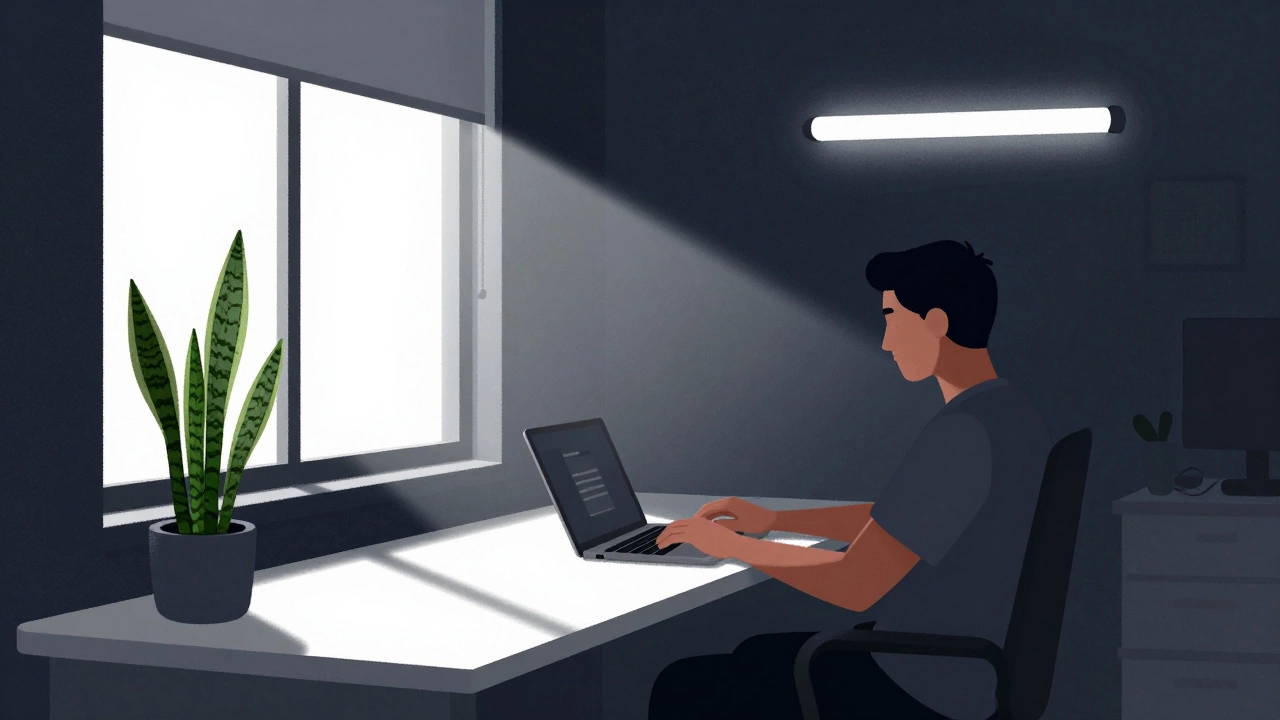
Humans evolved with sunlight. Our bodies depend on natural light cycles to regulate sleep, mood, and hormones. But most of us spend 90% of our time indoors-under artificial lighting that doesn’t match the sun’s rhythm.
Office workers who sit near windows get 173% more daylight exposure during the workday than those in windowless rooms. That small difference leads to better sleep, fewer headaches, and even higher productivity. A Harvard study showed that employees with access to natural light slept an extra 46 minutes per night on average. That’s over five hours a week-more rest than most people get from a weekend nap.
Green Spaces Aren’t Just Pretty-They’re Necessary
Walking through a park isn’t a luxury. It’s a biological need. Cities with more trees and parks have lower rates of depression, anxiety, and even heart disease. In Tokyo, researchers found that neighborhoods with over 30% tree cover had 25% fewer hospital visits for mental health issues.
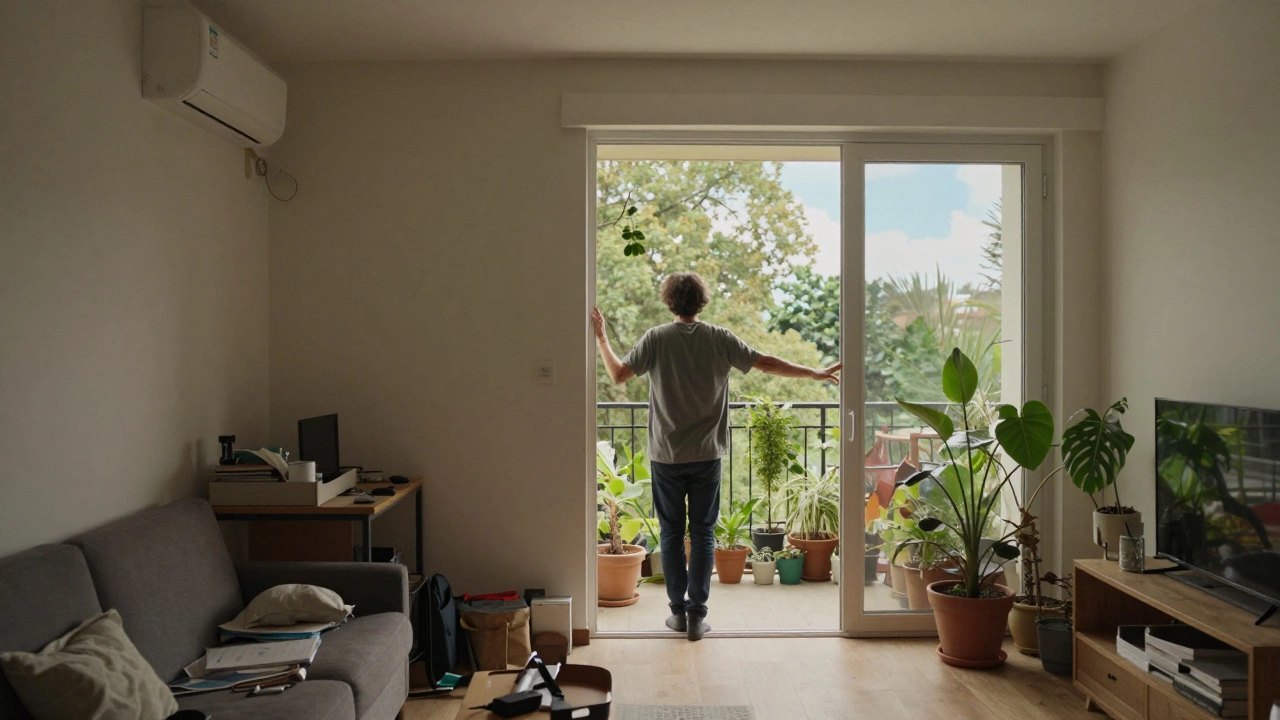
Even small patches of green help. A single tree outside your window can reduce stress. A balcony with a few plants can lower blood pressure. You don’t need a forest. You just need access to nature-even if it’s a patch of grass between buildings.
Indoor Air Is Often Worse Than Outdoor Air
Most people assume outdoor pollution is the main problem. But indoor air can be two to five times more polluted. Cleaning products, synthetic carpets, new furniture, and even printers release chemicals called VOCs-volatile organic compounds. These can cause headaches, dizziness, and long-term lung damage.
Simple fixes work. Opening windows for 10 minutes a day cuts indoor toxins by half. Houseplants like snake plants and peace lilies naturally filter air. A NASA study showed that just one plant per 100 square feet can noticeably improve air quality. You don’t need fancy gadgets. Just fresh air and a few leaves.
How Your Space Shapes Your Behavior
It’s not just about health-it’s about action. People in neighborhoods with sidewalks, bike lanes, and parks are more likely to walk, exercise, and connect with neighbors. In contrast, areas with cracked sidewalks, no lighting, and no green space see higher rates of isolation and inactivity.
One Chicago neighborhood redesigned its alleyways by adding lighting, benches, and murals. Within a year, community gatherings doubled. Crime dropped 18%. People started talking to each other. The space changed behavior-not because of new rules, but because it felt safe and welcoming.
What You Can Do Today
You don’t need to move or spend thousands to improve your environment. Small changes add up:
- Open a window for 10 minutes every morning-even in winter.
- Add one houseplant to your desk or bedroom.
- Take a 15-minute walk in a park or tree-lined street three times a week.
- Turn off artificial lights an hour before bed. Use a warm lamp instead.
- Declutter one drawer or shelf. Clutter increases mental noise.
These aren’t "self-care" trends. They’re science-backed adjustments that rewire your nervous system for calm and clarity.
Why This Matters for Environmental Groups
Environmental groups don’t just protect trees and rivers. They protect people. Clean air, quiet neighborhoods, accessible parks, and safe streets aren’t just ecological goals-they’re public health goals. When a group pushes for more urban green space, they’re reducing asthma rates. When they fight noise pollution laws, they’re helping kids learn. When they demand better public transit, they’re cutting emissions and encouraging walking.
Environmental justice isn’t about saving polar bears-it’s about making sure every child, no matter their zip code, can breathe clean air, hear birds instead of sirens, and walk to a park without fear.
If you’ve ever felt better after stepping outside, you already know why this matters. The environment isn’t something "out there." It’s part of you. And changing it-starting with your own corner of the world-can change how you feel, think, and live.
Can living near a busy road really hurt my health?
Yes. Living near heavy traffic increases exposure to air pollution and constant noise, both linked to higher risks of heart disease, high blood pressure, and stroke. Children in these areas also show lower cognitive development. Studies show that even moving just 150 meters away from a major road can reduce health risks by up to 20%.
Do houseplants actually improve air quality?
Yes, but not as dramatically as some blogs claim. Houseplants like snake plants, spider plants, and peace lilies absorb small amounts of toxins like formaldehyde and benzene. They won’t replace an air purifier in a polluted room, but they help. More importantly, they reduce stress and make spaces feel calmer-which has real health benefits.
How much green space do I need to feel the benefits?
You don’t need a lot. Research shows that even 20 minutes in a green space-like a small park or tree-lined street-can lower stress hormones. The key is regular exposure. One 15-minute walk three times a week is more effective than one long hike once a month. Consistency matters more than size.
Why does natural light affect my mood so much?
Sunlight triggers serotonin production, a brain chemical linked to mood and focus. It also regulates melatonin, the sleep hormone. Without enough natural light, your body’s internal clock gets confused. That leads to poor sleep, low energy, and higher risk of seasonal depression. Getting 30 minutes of daylight within an hour of waking up helps reset your rhythm.
Can I fix a noisy apartment without moving?
Yes. Heavy curtains, rugs, and bookshelves against walls absorb sound. White noise machines or fans can mask inconsistent noises like traffic. Earplugs at night help with sleep. If you rent, talk to your landlord-many cities now require soundproofing in new buildings, and some allow tenants to request upgrades.