Understanding the 6 Levels of Organization in the Environment
 Sep, 4 2026
Ecological Levels Explorer & Quiz
Explore how ecologists organize life into a hierarchy. Click on a level below to see its definition, examples, and focus areas.
Organism
Level 1A single living entity, whether it’s a bacterium, a fern, or a human being.
Adaptation & Survival. How does an individual survive?
Everything starts here. Studying physiology and behavior at this level helps us understand basic survival mechanisms.
Visual Hierarchy (Click to Explore)
Test Your Knowledge
Question 1: What is the difference between a community and an ecosystem?
Quiz Complete!
You scored 0 out of 0.
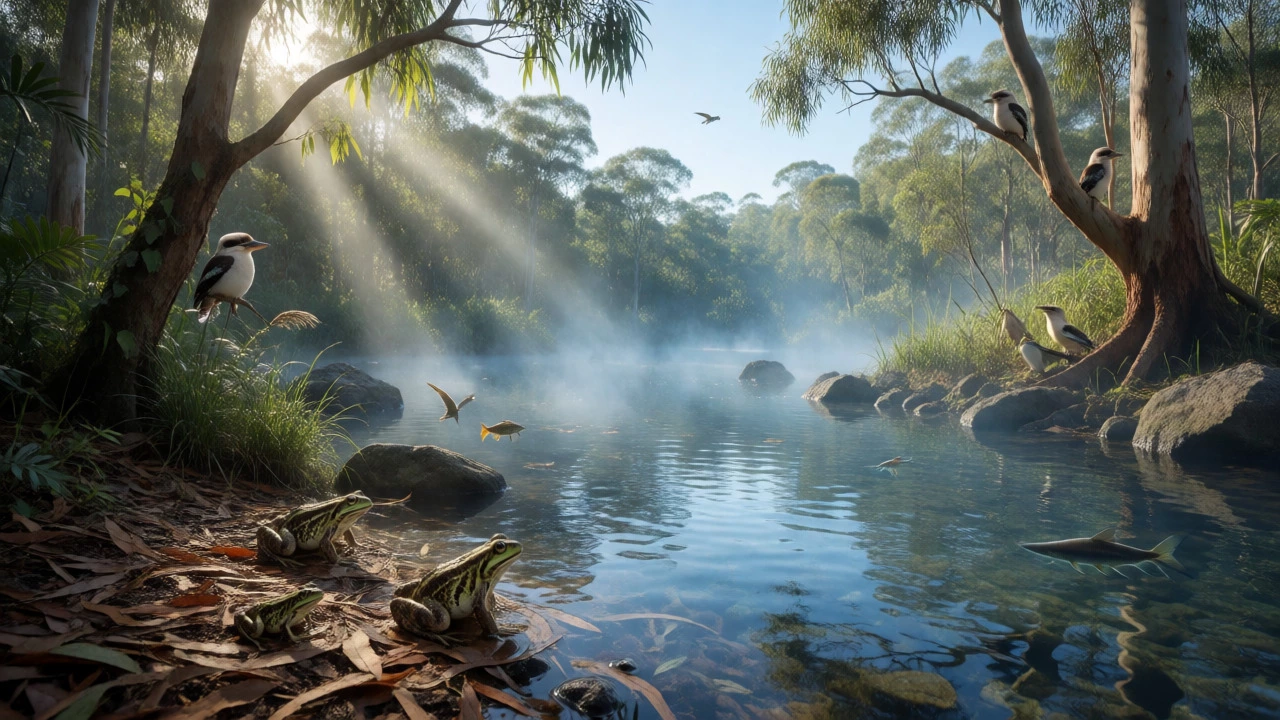
You’re standing in a patch of bushland near Melbourne’s Yarra River. You see a kookaburra, some gum trees, and maybe a frog hopping through the leaf litter. But how do ecologists actually make sense of all that chaos? They don’t just look at random animals; they sort life into a specific hierarchy. This structure is known as the levels of ecological organization. It’s essentially a ladder that helps scientists understand how living things interact with each other and their surroundings.
If you’ve ever wondered why protecting one species matters for the whole forest, or how a change in water temperature affects fish populations, this framework is the answer. It moves from the smallest unit-a single organism-up to the entire planet. Understanding these six levels isn’t just academic trivia; it’s crucial for anyone involved in conservation, policy-making, or even backyard gardening. Let’s break down exactly what each level means and why the connections between them are so fragile.
The Foundation: Organism and Population
Everything starts with the individual. In ecology, an organism is any single living entity, whether it’s a bacterium, a fern, or a human being. At this level, we study how an individual survives. How does a koala find enough eucalyptus leaves to eat? How does a salmon navigate upstream to spawn? These are questions about physiology and behavior.
But organisms rarely live alone. When multiple individuals of the same species occupy a specific area, they form a population. A population isn’t just a group; it’s a breeding pool. For example, all the platypuses in a specific section of the Murray River constitute one population. Ecologists track population size, density, and growth rates here. If a disease wipes out half the platypuses in that river section, the population crashes, but the species itself doesn’t go extinct globally. This distinction is vital for local conservation efforts. You aren’t saving "platypuses" in general; you’re saving a specific genetic lineage in a specific place.
Growing Complexity: Community and Ecosystem
Now, zoom out a bit. A community includes all the different populations living together in one area. Think of a coral reef. It’s not just clownfish; it’s the sharks, the algae, the crabs, and the bacteria all interacting. The key word here is interaction. Who eats whom? Who competes for space? Who helps whom survive?
| Level | Definition | Key Focus | Example |
|---|---|---|---|
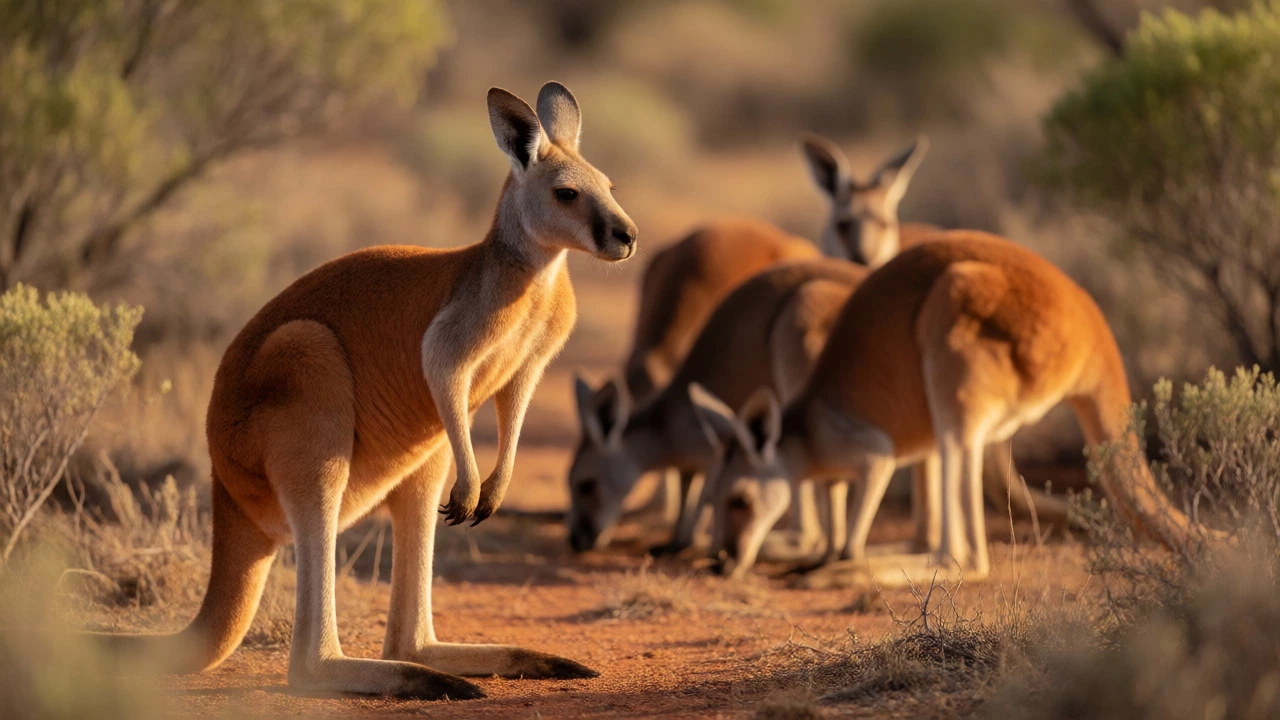
| Organism | Single living individual | Adaptation & Survival | A single Red Kangaroo |
| Population | Group of same species in an area | Density & Growth | All Red Kangaroos in Uluru National Park |
| Community | All populations in an area | Interactions & Diversity | Kangaroos, snakes, grasses, insects in Uluru |
| Ecosystem | Community + Abiotic factors | Energy Flow & Nutrients | Uluru ecosystem including rocks, heat, soil |
This brings us to the next critical step: the ecosystem. An ecosystem adds the non-living parts of the environment to the mix. We call these abiotic factors. This includes sunlight, temperature, water, soil chemistry, and wind. Why does this matter? Because you can’t understand the kangaroo without understanding the heat. If the average temperature rises by two degrees, the grass dries out, the kangaroo struggles to find food, and the predators starve. The ecosystem level forces us to look at energy flow-how sunlight turns into plant biomass, which turns into animal muscle-and nutrient cycling, like how nitrogen moves from the air into the soil and back again.
The Big Picture: Biome and Biosphere
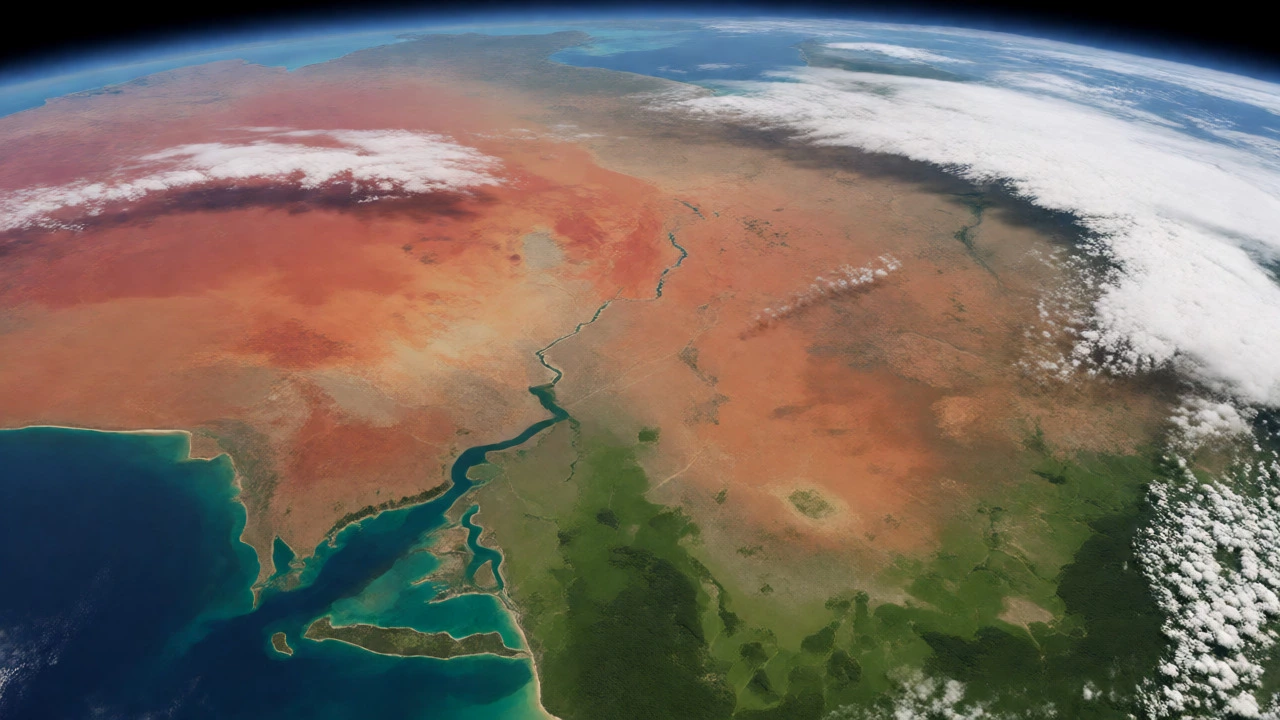
As we climb higher up the ladder, the scale gets massive. A biome is a large geographical area characterized by similar climate and dominant vegetation. Australia has several distinct biomes, such as the tropical rainforests of Queensland and the arid deserts of the interior. Each biome has its own set of adapted species. Cacti thrive in deserts because they store water; ferns dominate rainforests because they need constant moisture. Studying biomes helps us predict how global climate change will shift habitats north or south.
Finally, we reach the top: the biosphere. This is the sum of all ecosystems on Earth. It’s the thin layer of life wrapping around our planet-from the deepest ocean trenches to the highest mountain peaks. The biosphere operates as a single, interconnected system. Carbon emitted in Melbourne affects atmospheric composition globally. Plastic waste dumped in the Pacific Ocean ends up in Antarctic ice cores. At this level, there are no borders. Pollution, climate change, and biodiversity loss are biosphere-wide issues that require international cooperation.
Why Hierarchy Matters for Conservation
So, why should you care about these labels? Because mistakes happen when people ignore the hierarchy. If you only focus on the organism level, you might save a single endangered tree but fail to realize that the fungus needed for its roots to absorb nutrients is gone. That’s a community-level problem. If you only look at the ecosystem level, you might restore a wetland locally but miss that the migratory birds using it are declining across their entire flyway (a biome or biosphere issue).
Effective environmental groups use this framework to target their actions. Local volunteers might work on population recovery for a specific frog species. State governments manage ecosystems by regulating water usage. International treaties address biosphere concerns like carbon emissions. Recognizing which level you are operating on ensures your efforts are effective. It stops you from putting a band-aid on a broken leg.
Common Misconceptions About Ecological Levels
People often confuse "community" with "ecosystem." Remember, if you remove the water, rocks, and sun, you still have a community of organisms. Add those physical elements back, and it becomes an ecosystem. Another common error is thinking that larger levels are always more important. They aren’t. The stability of the biosphere depends entirely on the health of individual organisms and populations. If keystone species disappear at the population level, the entire ecosystem can collapse, regardless of how well-managed the broader region seems.
Also, boundaries between levels are fluid. A river flows through many communities. Birds move between biomes. Ecology isn’t about rigid boxes; it’s about dynamic relationships. The six levels are tools to help us think clearly, not walls that separate nature.
What is the difference between a community and an ecosystem?
A community consists only of the living organisms (plants, animals, microbes) in an area. An ecosystem includes those living organisms plus the non-living (abiotic) components like water, soil, sunlight, and temperature. Essentially, an ecosystem is a community plus its physical environment.
Is a herd of elephants a population or a community?
A herd of elephants is a population because it consists of individuals of the same species. A community would include the elephants, the grasses they eat, the birds that nest in nearby trees, and the insects in the soil-all living together in that specific area.
How does climate change affect the levels of ecological organization?
Climate change impacts every level. It stresses individual organisms (organism), alters birth and death rates (population), shifts species ranges causing new interactions (community), changes rainfall and temperature patterns (ecosystem), transforms large regions like turning forests into savannas (biome), and ultimately threatens the stability of the entire planetary life support system (biosphere).
Can a single organism be considered an ecosystem?
In very specific contexts, yes. Some scientists refer to a host organism and its microbiome (gut bacteria, skin fungi) as a "holobiont," which functions like a miniature ecosystem. However, in standard educational frameworks, an ecosystem typically refers to a larger spatial scale involving multiple species and their physical environment.
Why is the biosphere considered the highest level of organization?
The biosphere is the highest level because it encompasses all life on Earth and all the areas where life exists. It includes every biome, ecosystem, community, population, and organism. It represents the total sum of ecological interactions and is the largest scale at which we can study environmental processes.