Do Employers Look at Volunteer Work? The Real Impact on Hiring
 Oct, 27 2026
Volunteer Impact Scorecard
Enter details about a specific volunteer role you are considering adding to your resume. This tool helps you determine if it's worth the space and how to frame it.
Your Volunteer Score
0/100Enter your details and click Calculate to see recommendations.
You’ve spent your weekends packing food boxes or tutoring kids in math. Now you’re staring at a blank resume template, wondering if any of that unpaid labor actually matters to the person holding your application. Here is the blunt truth: employers do look at volunteer work, but not for the reasons you might think. They aren’t just checking a box to see if you’re a "good person." They are hunting for evidence of skills, character, and cultural fit that paid jobs sometimes fail to show.
If you are early in your career, switching industries, or have gaps in your employment history, volunteering isn't just nice-to-have filler. It can be the deciding factor between a rejection email and an interview invite. But here is the catch: how you present it changes everything. A vague line item saying "Volunteered at Animal Shelter" does almost nothing. Specific, results-driven descriptions turn charity work into professional proof.
Why Hiring Managers Actually Care About Your Charity Work
Recruiters spend an average of six to seven seconds scanning a resume. In that blink of an eye, they are looking for red flags and green lights. Volunteer work acts as a green light when it fills specific voids in your profile. For entry-level candidates with little paid experience, it demonstrates initiative. You didn’t wait for someone to pay you to learn how to manage a project; you sought out the opportunity yourself.
For mid-career professionals, it signals adaptability. If you were a marketing manager who volunteered as a treasurer for a non-profit, you just proved you understand finance and budgeting without needing a new job title to teach you. According to a Deloitte survey, nearly half of hiring managers say they prefer candidates with volunteer experience because it often highlights leadership and teamwork skills that don't always shine in a standard 9-to-5 role.
Think about it this way: Paid work shows what you can do when someone tells you to do it. Volunteer work shows what you will do when no one is watching. That distinction is powerful.
The Skills Gap: How Volunteering Proves Soft Skills
Technical skills get you past the algorithm. Soft skills get you hired by the human. And frankly, most resumes are terrible at proving soft skills. Saying "I am a good communicator" is meaningless. Showing that you coordinated a team of 15 diverse volunteers to organize a city-wide cleanup event? That proves communication, logistics, and conflict resolution.
| Volunteer Activity | Hidden Professional Skill | Resume Bullet Point Example |
|---|---|---|
| Tutoring students | Mentorship & Communication | Designed personalized learning plans for 10+ students, resulting in a 20% improvement in test scores. |
| Fundraising events | Sales & Negotiation | Secured $5,000 in sponsorships by pitching value propositions to local businesses. |
| Board Member | Strategic Planning & Governance | Collaborated with board members to revise organizational bylaws, improving operational efficiency. |
| Food Bank Sorting | Process Optimization & Teamwork | Streamlined inventory sorting process, reducing distribution time by 15 minutes per shift. |
Notice the difference in those bullet points? They use action verbs and metrics. This transforms "charity" into "experience." When you frame your volunteer work this way, you stop sounding like a hobbyist and start sounding like a problem-solver.
Where to Put Volunteer Work on Your Resume
This is where many people mess up. Should it go under "Experience" or "Activities"? The answer depends on your career stage and relevance.
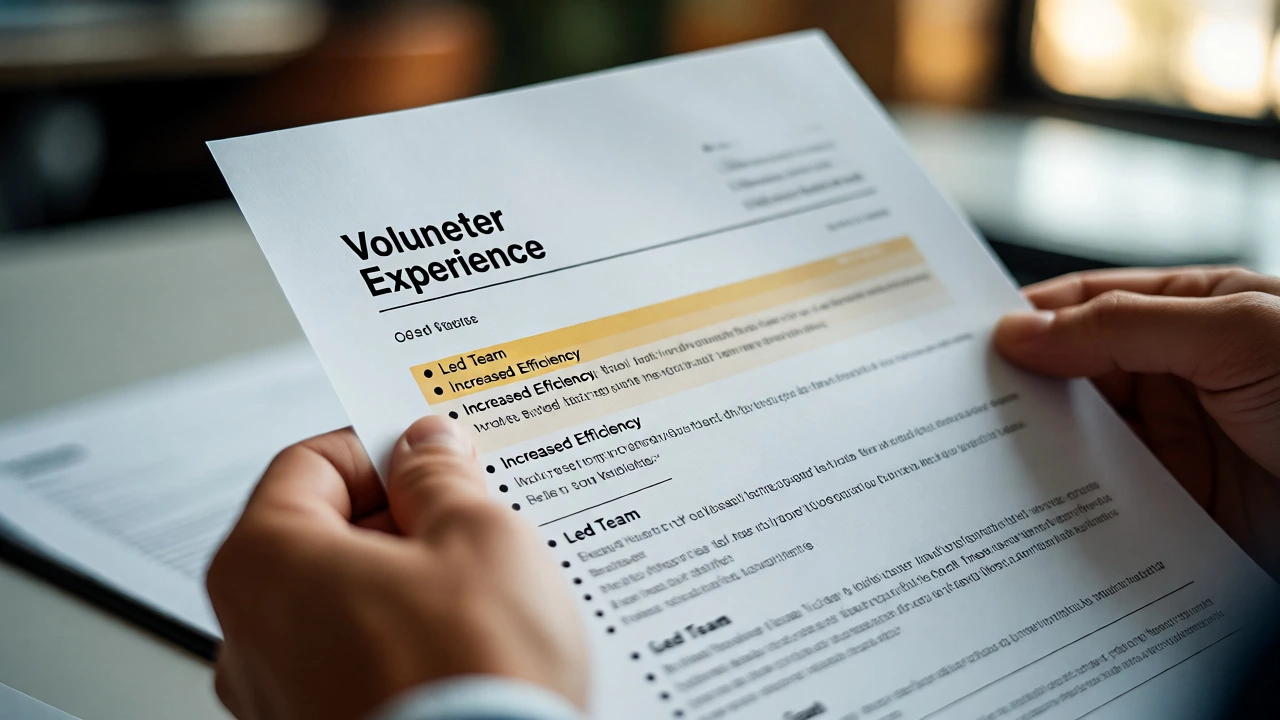
- Early Career/Students: Treat significant volunteer roles as "Experience." If you spent two years leading a youth group, list it right below your internships. Use the same format: Title, Organization, Dates, Bullets.
- Career Changers: If your volunteer work is in the field you want to enter, put it high up. Want to move from sales to healthcare administration? Highlight your hospital board membership prominently.
- Established Professionals: Create a separate section called "Community Involvement" or "Leadership & Service." Keep it brief unless the role was executive-level (e.g., Board Chair).
Never bury relevant volunteer work at the bottom of the page if it’s your strongest asset. Visual hierarchy matters. If you have a gap in employment, place the volunteer role directly over the gap dates to show continuous engagement.

When Volunteer Work Hurts More Than Helps
It sounds counterintuitive, but bad volunteer listing can hurt you. First, avoid "resume padding." Listing every single hour you spent handing out flyers for ten different causes looks scattered. Pick the three most impactful ones. Depth beats breadth every time.
Second, watch out for tone. Avoid sounding self-congratulatory. Phrases like "Saved the world" or "Selfless hero" can feel off-putting in a professional context. Stick to facts and outcomes. Let the impact speak for itself.
Finally, ensure consistency. If you claim to be passionate about environmental sustainability in your cover letter but your volunteer history is entirely unrelated to that cause, you create cognitive dissonance. Align your narrative. If you apply to a tech company, highlight volunteer roles that involved technology, data entry, or digital marketing. Relevance trumps prestige.
Networking: The Hidden ROI of Volunteering
Here is something recruiters rarely say out loud: they check references. And guess who knows your volunteer supervisors? Other volunteers. Often, these people work at companies you want to join. Volunteering puts you in proximity to decision-makers in low-stakes environments.
I once knew a graphic designer who struggled to find full-time work. She started designing logos for a local animal rescue. Two years later, the rescue’s donor-a senior partner at a major agency-asked her to freelance. That connection came from seeing her work ethic in action, not from a LinkedIn message. Volunteering builds trust capital faster than networking events because you are collaborating on shared goals, not exchanging business cards.

How to Talk About Volunteer Work in Interviews
When asked, "Tell me about yourself," or "What are your strengths?", weave your volunteer stories in naturally. Don’t force it, but don’t hide it either.
Use the STAR method (Situation, Task, Action, Result) to tell a quick story. For example: "While volunteering at the food bank (Situation), we faced a shortage of volunteers during the holiday rush (Task). I organized a schedule rotation and recruited five new helpers via social media (Action), which allowed us to serve 200 extra families that week (Result)." This shows leadership, resourcefulness, and impact.
Employers love hearing about times you solved problems with limited resources. Volunteer work is essentially a sandbox for doing exactly that. You rarely have big budgets or large teams. You make things happen anyway. That resilience is highly attractive in startups and fast-paced corporate environments alike.
Key Takeaways
- Yes, employers care: Volunteer work provides tangible evidence of soft skills and initiative.
- Relevance rules: Tailor your volunteer descriptions to match the job requirements.
- Format matters: Treat significant roles like paid experience on your resume.
- Quantify impact: Use numbers and outcomes, not just duties.
- Network actively: Leverage volunteer connections for hidden job opportunities.
Ultimately, your volunteer work is part of your professional brand. It shows who you are when the paycheck stops. Make sure it speaks clearly, specifically, and confidently.
Should I include short-term volunteer gigs on my resume?
Only if they demonstrate relevant skills or fill a significant gap. One-off events usually lack depth. Focus on roles where you had sustained responsibility, such as serving on a committee or mentoring for several months.
Does volunteer work count as work experience?
For entry-level candidates or career changers, yes. If the role required professional-level skills (like accounting, coding, or management), list it under Experience. For seasoned professionals, it is better placed in a separate "Community Involvement" section.
How much volunteer work should I list?
Quality over quantity. List 2-4 meaningful experiences rather than ten minor ones. Ensure each entry has clear bullet points highlighting achievements and skills used.
Can volunteer help with employment gaps?
Absolutely. It shows you remained active and engaged. Place the volunteer role chronologically within the gap period on your resume to demonstrate continuity of skill development.
Do remote volunteer positions count?
Yes, especially in today's hybrid work environment. Remote volunteering demonstrates digital literacy, self-motivation, and ability to collaborate across time zones-skills highly valued in modern workplaces.