Charitable Remainder Trust Runs Out of Money: What Happens Next?
 Oct, 13 2026
Charitable Remainder Trust Depletion Simulator
Estimate how long your trust assets will last given specific payout rates and expected annual returns. This tool helps visualize the risk of depletion for both fixed-payment (CRAT) and variable-payment (CRUT) structures.
Enter values and click Simulate to see results.
You set up a Charitable Remainder Trust (CRT) to get a tax break and a steady income stream, with the promise that whatever is left goes to your favorite charity. But what if the market crashes, or you withdraw too much? Does the charity lose out? Do you have to pay back taxes? The short answer is: it depends on how the trust was structured and why it ran dry. Most people assume the trust acts like a bank account that just empties out, but legally, it’s more complex.
If your Charitable Remainder Trust runs out of money before the term ends, the outcome hinges on whether it’s a Charitable Remainder Annuity Trust (CRAT) or a Charitable Remainder Unitrust (CRUT). These two structures handle financial shortfalls very differently. Understanding this distinction saves you from panic-and potentially from IRS audits.
The Core Difference: CRAT vs. CRUT When Funds Dry Up
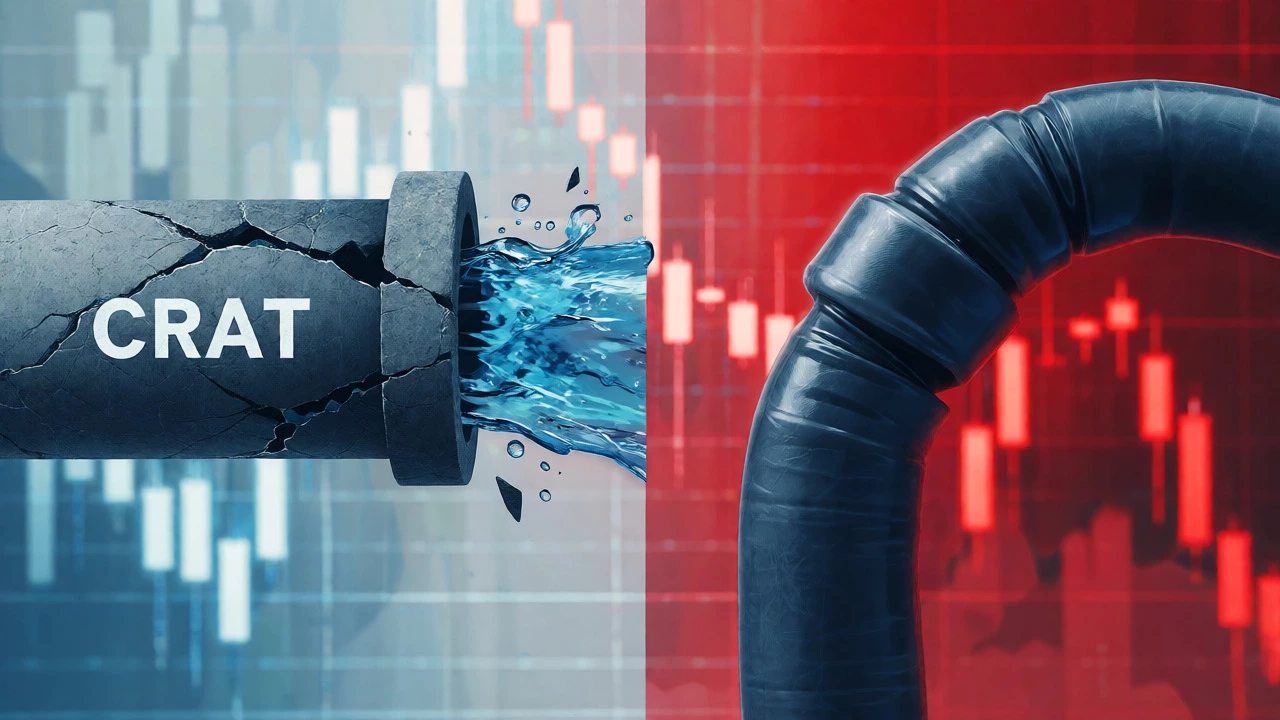
Think of a CRAT as a fixed-income contract. You promised yourself (or someone else) a specific dollar amount every year for a set number of years or for life. If the trust assets drop in value, the payments don’t change. If the trust runs out of cash, the trustee must still find a way to make those payments until the term expires. This often means selling assets at a loss or borrowing against future charitable interests. If the trust truly depletes before the term ends, the non-charitable beneficiaries might stop receiving payments early, but the charity usually gets nothing because there’s no remainder left.
A CRUT, on the other hand, pays a percentage of the trust’s value each year. If the portfolio shrinks, your payment shrinks too. This self-correcting mechanism makes it less likely to "run out" in the traditional sense, unless the market collapses completely. However, if the trust balance hits zero, payments simply stop. The charity receives nothing because there is no remainder. In both cases, the key takeaway is that the charity only benefits if there’s something left over. If the pot is empty, the charity walks away with $0.
What Triggers Depletion?
Trusts rarely run out of money overnight. It’s usually a slow bleed caused by one of three things:
- Over-distribution: Setting the payout rate too high relative to the investment return. For example, taking 7% annually while earning 4% creates a deficit every year.
- Market Volatility: A significant downturn in stocks or real estate can erode the principal faster than distributions reduce it.
- High Fees: Poorly managed trusts with excessive administrative costs eat into the principal, especially in smaller trusts under $100,000.
It’s worth noting that the IRS has strict rules about minimum payouts. For a CRAT, the annual payment must be between 5% and 50% of the initial fair market value. For a CRUT, it’s 5% to 50% of the current value. If you’re hitting the upper limits of these ranges during a bull market, you’re playing with fire when the market turns bearish.
Tax Implications When the Trust Fails
This is where it gets tricky. When you funded the trust, you took a partial charitable deduction based on the projected remainder interest. If the trust runs out of money and the charity gets nothing, did you claim too big a deduction? Generally, no. The IRS looks at the actuarial tables and assumptions made at the time of funding. As long as you followed the rules and didn’t commit fraud, you don’t typically have to repay the tax benefit. The deduction was valid based on the information available then.
However, if the trust fails early, you might face unexpected tax bills on capital gains. If the trustee sells assets to cover distributions, those sales trigger capital gains taxes inside the trust. While CRTs are tax-exempt entities, they aren’t immune to all taxes. Unrelated Business Income Tax (UBIT) can apply if the trust holds certain types of debt-financed property. If the trust runs low on cash, these tax liabilities can accelerate the depletion further, creating a vicious cycle.
Can You Save a Depleted Trust?
Not always, but sometimes. If the trust is close to running out, the trustee might propose restructuring. One common tactic is converting a CRAT to a CRUT, though this requires IRS approval and isn’t always possible. Another option is adding new assets to the trust, but this doesn’t increase your original tax deduction-it just keeps the trust alive longer.
Some trustees attempt to borrow money against the future charitable interest. This works if the remaining term is short and the charity agrees to subordinate its interest to the loan. But lenders are wary of lending against a shrinking asset base, so interest rates tend to be high. This strategy is risky and should only be used with professional legal advice.

Who Bears the Risk?
In most standard CRT setups, the risk falls on everyone. The donor loses their expected income stream. The charity loses its expected gift. The trustee faces potential liability if they mismanaged the funds. Did the trustee follow the prudent investor rule? If they invested aggressively without regard to the distribution requirements, beneficiaries might sue for breach of fiduciary duty. Conversely, if the trustee was too conservative and missed growth opportunities, they could also be held accountable.
Here’s a quick comparison of what happens when funds hit zero:
| Scenario | Impact on Donor/Beneficiary | Impact on Charity | Tax Consequence |
|---|---|---|---|
| CRAT runs out mid-term | Payments cease; loss of guaranteed income | Receives $0 remainder | No clawback of deduction; possible UBIT issues |
| CRUT balance hits zero | Payments cease; variable income lost | Receives $0 remainder | No clawback of deduction |
| Trustee negligence | Potential lawsuit for damages | May pursue claim against trustee | Legal fees may reduce any remaining assets |
Preventing Depletion Before It Starts
The best fix is prevention. When setting up a CRT, work with a fee-only financial planner who understands the math behind these trusts. Don’t let the sales pitch blind you to the risks. Ask for stress tests: What happens if the market drops 30% in year one? What if inflation stays high for a decade?
Consider these safeguards:
- Diversify Investments: Don’t put everything in one stock sector. A mix of bonds, dividend-paying stocks, and real estate can smooth out volatility.
- Adjust Payout Rates: If you’re young and healthy, consider a lower payout rate initially. You can take less now to ensure the trust survives later.
- Monitor Fees: Keep an eye on administrative costs. In small trusts, fees can consume 1-2% of assets annually, which is a huge drag on performance.
- Review Annually: Meet with your trustee once a year to review performance and adjust strategies if needed.
Remember, a Charitable Remainder Trust is a long-term commitment. It’s not a get-rich-quick scheme or a simple savings account. Treating it with the seriousness of a mortgage or retirement plan helps avoid nasty surprises down the road.
Do I have to pay back my tax deduction if the trust runs out of money?
Generally, no. The IRS calculates deductions based on actuarial projections at the time of funding. Unless there was fraud or a violation of trust terms, you do not owe back taxes even if the charity ultimately receives nothing due to market losses.
What happens to my monthly income if the trust depletes?
If the trust runs out of liquid assets, payments will stop. For a CRAT, the trustee may try to sell illiquid assets to continue payments, but if the trust is truly insolvent, income ceases until the term ends or assets are recovered.
Can the charity sue me if they get nothing?
Rarely. The charity accepted the trust structure knowing the risks. They typically sue the trustee for mismanagement rather than the donor, provided the donor acted in good faith and didn’t manipulate the trust improperly.
Is it better to choose a CRUT over a CRAT to avoid running out?
CRUTs are generally safer against depletion because payouts adjust downward when assets fall. CRATs offer predictable income but carry higher risk of insolvency if investments underperform the fixed payout rate.
Can I add more money to a depleted trust?
Yes, you can add additional assets to a CRT, but you won’t get a new tax deduction for them. Adding funds can help sustain the trust and restore some income flow, effectively extending its life.